technifyed

Vanderbilt University via Coursera

AI Agents with Model Context Protocol

4.618 ratings at Coursera

Overview

Build AI Agents That Actually Work

AI agents are everywhere—but most of them fail in frustrating, unpredictable ways. They get confused, waste tokens, hit dead ends, and require constant babysitting. This course teaches you the patterns and architectures that separate agents that struggle from agents that succeed.

Using Python and the Model Context Protocol (MCP), you'll learn to build AI agents from the ground up—and more importantly, you'll learn why certain designs work while others fall apart.

What You'll Learn:

- Build MCP Tool Servers — Create the bridge that lets AI agents interact with any system: filesystems, databases, APIs, or your own custom tools

- Build a Research Agent - Create your own research agent that can explore your computer and help answer questions with documents, find that missing data, or explain how code works.

- Master the Agent Loop — Understand the universal pattern every AI agent follows: PERCEIVE → DECIDE → ACT → OBSERVE → REPEAT

- Connect agents to tools — Wire up LLMs to discover, select, and execute tools autonomously

The Patterns That Make Agents Reliable:

- Response-as-Instruction — Your tools don't just return data—they guide agent behavior in real-time. Learn to design tool responses that teach the agent what to do next, when to stop, and how to communicate results.

- Failing Forward — Turn errors from dead ends into stepping stones. Design error messages that teach agents how to recover—automatically, without human intervention. For the first time in computing history, your error messages have a reader that can actually do something about them.

- Intelligence Budget — Every token in the context window is precious attention. Learn to maximize signal and minimize noise—pre-digesting data in tools, using scripted orchestration for mechanical work, and reserving the agent's cognitive resources for decisions that actually require intelligence.

Syllabus 5

  1. Getting Started with Model Context Protocol (MCP) for AI Agents 40 minutes
  2. AI Agent Loops & Model Context Protocol 1.5 hours
  3. Building AI Agents with Model Context Protocol 1.5 hours
  4. Robust Error Handling Techniques for AI Agents 1.5 hours
  5. Faster, More Predictable, More Capable AI Agents 2 hours

Advantages and disadvantages

Advantages

  • Structured courses with graded quizzes, assignments and deadlines you can reset.
  • A shareable certificate from the university or company when you pay.
  • Financial aid is often approved for students in India (apply 15 days before you need it).
  • From Vanderbilt University, a well-regarded name.
  • Self-paced: start any time.
  • A clear syllabus (5 parts) you can see before you start.

Disadvantages

  • Paid after a 7-day free trial (Coursera Plus or per course).
  • Some courses can be audited for free, but graded work and certificates need payment.

Some points apply to every course of this kind; see how we rank.

This course is paid. Here is how to take it for free

  • Free trials: You can start a 7-day free trial for many individual courses, Specializations, or a Coursera Plus subscription to test full course features. Cancel before the seventh day if you do not want to be charged.
  • Financial aid: If you cannot afford the fee for a certificate, you can apply for financial aid through the link on the course home page by filling out an application about your background and goals.

Taught by

  • Dr. Jules WhiteProfessor of Computer Science, Computer Science

Vanderbilt University is in Tier 2: excellent universities and the companies that build the technology of our institution ranking (86/100).

Similar courses

Compare these

Stanford University · YouTube

Artificial Intelligence

For more information about Stanford's Artificial Intelligence programs visit: https://stanford.io/ai Delve into the exciting world of Artificial Intelligence with insights and research from the world's top experts. This playlist offers a comprehensive journey, from foundational machine learning con…

Free video187 videos, 142 hours

Stanford University · YouTube

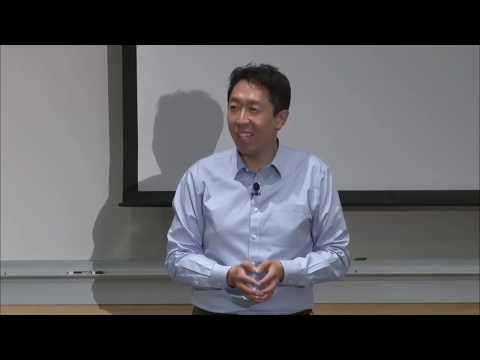
Stanford CS229: Machine Learning led by Andrew Ng | Autumn 2018

Led by Andrew Ng, this course provides a broad introduction to machine learning and statistical pattern recognition. Topics include: supervised learning (generative/discriminative learning, parametric/non-parametric learning, neural networks, support vector machines); unsupervised learning (cluster…

Free video21 videos, 28 hours

Massachusetts Institute of Technology · YouTube

MIT 6.01SC Introduction to EECS I

Instructor: Dennis Freeman, Kendra Pugh This course provides an integrated introduction to electrical engineering and computer science, including modern software engineering, linear systems analysis, electronic circuits, and decision-making. The lecture videos provide an overview of each topic, whi…

Free video27 videos, 17 hours

Stanford University · YouTube

Stanford CME295: Transformers and Large Language Models I Autumn 2025

This course explores the world of Transformers and Large Language Models (LLMs). You will learn the evolution of NLP methods, the core components of the Transformer architecture, along with how they relate to LLMs as well as techniques to enhance model performance for real-world applications. Throu…

Free video9 videos, 16 hours

Stanford University · YouTube

Transformers

Dive into the intriguing world of AI Transformers with this curated YouTube playlist. Featuring expert insights, educational content from leading organizations, and engaging discussions, this playlist keeps you informed about the latest breakthroughs in Transformer technology.

Free video16 videos, 17 hours

Stanford University · YouTube

Stanford CS25 - Transformers United

Stanford CS25: Transformers United Since their introduction in 2017, transformers have revolutionized Natural Language Processing (NLP). Now, transformers are finding applications all over Deep Learning, be it computer vision (CV), reinforcement learning (RL), Generative Adversarial Networks (GANs)…

Free video50 videos, 56 hours

Enter your email and the official page opens. Phone is optional.