Transform your data engineering practice with comprehensive DataOps automation skills that eliminate manual processes, reduce errors by 70%, and accelerate deployment cycles. This specialization teaches you to build production-grade data systems using Git workflows, Docker containerization, CI/CD pipelines, Ansible automation, Airflow orchestration, and advanced debugging techniques. Through hands-on projects simulating real enterprise environments, you'll develop the automation expertise that distinguishes senior data engineers who architect resilient, scalable data platforms from those still managing systems manually.
Courses in this learning path or series 11
Resolve Conflicts & Trace Bugs with Git
Create Branching Strategies for Parallel Development
Automate Software Installation with Ansible
Build & Publish Versioned Docker Images
Automate Data Deployments with CI/CD Pipelines
Automate, Optimize, and Benchmark Data Pipelines
Automate Data Workflows with Airflow Excellence
Automate, Debug, and Customize SQL Databases
Automate, Analyze, and Database Administration
Debug Python Pipelines: Root Causes
Trace and Fix Data Anomalies
Advantages and disadvantages
Advantages
Structured courses with graded quizzes, assignments and deadlines you can reset.
A shareable certificate from the university or company when you pay.
Financial aid is often approved for students in India (apply 15 days before you need it).
Self-paced: start any time.
A clear syllabus (11 parts) you can see before you start.
Disadvantages
Paid after a 7-day free trial (Coursera Plus or per course).
Some courses can be audited for free, but graded work and certificates need payment.
Some points apply to every course of this kind; see how we rank.
This course is paid. Here is how to take it for free
Free trials: You can start a 7-day free trial for many individual courses, Specializations, or a Coursera Plus subscription to test full course features. Cancel before the seventh day if you do not want to be charged.
Financial aid: If you cannot afford the fee for a certificate, you can apply for financial aid through the link on the course home page by filling out an application about your background and goals.
This is CS50P, CS50's Introduction to Programming with Python. Register for free at https://cs50.edx.org/python. Slides and source code at https://cs50.harvard.edu/python. Playlist at https://www.youtube.com/playlist?list=PLhQjrBD2T3817j24-GogXmWqO5Q5vYy0V. An introduction to programming using a la…
Instructor: Ana Bell View the complete course: https://ocw.mit.edu/courses/6-100l-introduction-to-cs-and-programming-using-python-fall-2022/ *Note: Lectures 6, 10 have been updated! This subject is aimed at students with little to no programming experience. It aims to provide students with an under…
This is CS50W, CS50's Web Programming with Python and JavaScript. Register for free at https://cs50.edx.org/web. Slides and source code at https://cs50.harvard.edu/web. This course picks up where Harvard University’s CS50 leaves off, diving more deeply into the design and implementation of web apps…
This course explores the concepts and algorithms at the foundation of modern artificial intelligence, diving into the ideas that give rise to technologies like game-playing engines, handwriting recognition, and machine translation. Through hands-on projects, students gain exposure to the theory beh…
This course explores the concepts and algorithms at the foundation of modern artificial intelligence, diving into the ideas that give rise to technologies like game-playing engines, handwriting recognition, and machine translation. Through hands-on projects, students gain exposure to the theory beh…
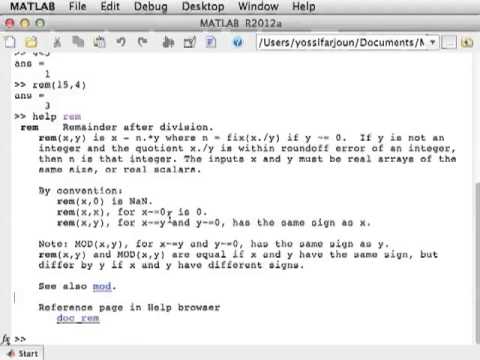
View the complete course: http://ocw.mit.edu/18-S997F11 Instructor: Yossi Farjoun This course is intended to assist undergraduates with learning the basics of programming in general and programming MATLAB® in particular. License: Creative Commons BY-NC-SA More information at http://ocw.mit.edu/term…