technifyedWeekly list

Harvard University

Introduction to Data Science with Python

via edX

4.3174 ratings at edX

Overview

Learn the concepts and techniques that make up the foundation of data science and machine learning.

What you'll learn

  • Gain hands-on experience and practice using Python to solve real data science challenges
  • Practice Python programming and coding for modeling, statistics, and storytelling
  • Utilize popular libraries such as Pandas, numPy, matplotlib, and SKLearn
  • Run basic machine learning models using Python, evaluate how those models are performing, and apply those models to real-world problems
  • Build a foundation for the use of Python in machine learning and artificial intelligence, preparing you for future Python study

Syllabus 8

  1. Linear Regression
  2. Multiple and Polynomial Regression
  3. Model Selection and Cross-Validation
  4. Bias, Variance, and Hyperparameters
  5. Classification and Logistic Regression
  6. Multi-logstic Regression and Missingness
  7. Bootstrap, Confidence Intervals, and Hypothesis Testing
  8. Capstone Project

Skills you'll practise

ParsingData ScienceStatisticsMatplotlib (Python Package)Scikit-Learn (Python Package)Machine LearningNumPy (Python Package)Scientific MethodsPandas (Python Package)AlgorithmsPython (Programming Language)Artificial IntelligenceProgramming LanguagesR (Programming Language)K-Nearest Neighbors Algorithm

Advantages and disadvantages

Advantages

  • One of the best-taught programming courses in the world, by David J. Malan and his team.
  • Problem sets are real projects that stay on your GitHub.
  • Free certificate from CS50 when you finish on cs50.harvard.edu (the edX certificate is paid).
  • Active community on Discord, Reddit and Ed for help at any hour.
  • University courses you can audit for free, with lectures, readings and practice quizzes.
  • A verified certificate from the university if you pay for it.
  • Taught by Harvard University, one of the strongest names in its field.
  • 331,233 learners have taken it, so help and notes are easy to find.

Disadvantages

  • Problem sets are hard and take far longer than the videos; plan 10–20 hours a week.
  • Lectures are long (about 2 hours each).
  • Graded assignments and the certificate need the paid track.
  • Audit access can expire a few weeks after the course ends.
  • Learning is free, but the certificate costs money.
  • Some parts (graded work, certificate) are paid.

Some points apply to every course of this kind; see how we rank.

Free to audit

  • Free: Choose "Audit this course" when you enrol: lectures, readings and practice are free.
  • Paid: Graded assignments and the verified certificate (Certificate $299). Audit access may end after the course closes.

Before you start

Learners must have a minimum baseline of programming knowledge (preferably in Python) and statistics in order to be successful in this course. Python prerequisites can be met with an introductory Python course offered through CS50’s Introduction to Programming with Python, and statistics prerequisites can be met via Fat Chance or with Stat110 offered through HarvardX.

Taught by

  • Pavlos ProtopapasScientific Program Director

Harvard University is in Tier 1: world-leading universities and India's top institutes of our institution ranking (98/100). CS50 and HarvardX are among the best-taught courses anywhere.

Similar courses

Compare these

Massachusetts Institute of Technology

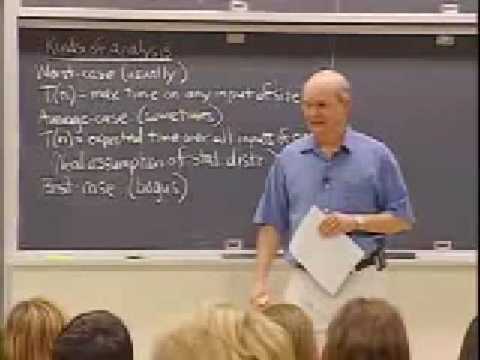
MIT 6.006 Introduction to Algorithms, Fall 2011

This course provides an introduction to mathematical modeling of computational problems. It covers the common algorithms, algorithmic paradigms, and data structures used to solve these problems. The course emphasizes the relationship between algorithms and programming, and introduces basic performa…

  • Free video
  • 47 videos, 42 hours

Massachusetts Institute of Technology

MIT 6.006 Introduction to Algorithms, Spring 2020

Instructor: Prof. Erik Demaine, Dr. Jason Ku, Prof. Justin Solomon View the complete course: https://ocw.mit.edu/6-006S20 YouTube Playlist: https://www.youtube.com/playlist?list=PLUl4u3cNGP63EdVPNLG3ToM6LaEUuStEY This course is an introduction to mathematical modeling of computational problems, as…

  • Free video
  • 32 videos, 35 hours

Massachusetts Institute of Technology

MIT 6.046J / 18.410J Introduction to Algorithms (SMA 5503),

This course teaches techniques for the design and analysis of efficient algorithms, emphasizing methods useful in practice. Topics covered include: sorting; search trees, heaps, and hashing; divide-and-conquer; dynamic programming; amortized analysis; graph algorithms; shortest paths; network flow;…

  • Free video
  • 23 videos, 30 hours

Massachusetts Institute of Technology

MIT 6.046J Design and Analysis of Algorithms, Spring 2015

View the complete course: http://ocw.mit.edu/6-046JS15 Instructors: Erik Demaine, Srinivas Devadas, Nancy Ann Lynch 6.046 introduces students to the design of computer algorithms, as well as analysis of sophisticated algorithms. License: Creative Commons BY-NC-SA More information at http://ocw.mit.…

  • Free video
  • 34 videos, 39 hours

Massachusetts Institute of Technology

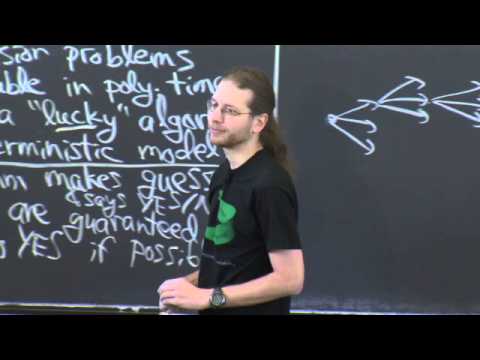
MIT 6.851 Advanced Data Structures, Spring 2012

View the complete course: http://ocw.mit.edu/6-851S12 Instructor: Erik Demaine Videos of 6.851 Lectures Spring 2012 License: Creative Commons BY-NC-SA More information at http://ocw.mit.edu/terms More courses at http://ocw.mit.edu

  • Free video
  • 22 videos, 30 hours

Harvard University

Fundamentals of TinyML

4.567 ratings

Focusing on the basics of machine learning and embedded systems, such as smartphones, this course will introduce you to the “language” of TinyML.

  • Free to audit
  • 5 weeks, 2 - 4 hours per week