This course introduces you to the fundamentals of NoSQL, including the four key non-relational database categories. By the end of the course you will have hands-on skills for working with MongoDB, Cassandra and IBM Cloudant NoSQL databases.
What you'll learn
Define the term NoSQL and the technology it references.
Explain the characteristics of NoSQL databases.
Describe the major categories of NoSQL datastores (document, key-value, graph, etc.) and their architectural differences.
List the most commonly used NoSQL datastores, their primary use cases and benefits (MongoDB, Cassandra, Cloudant, Couch DB, etc.).
Understand the factors affecting return on investment for using locally hosted databases, versus hosted database versus DBaaS.
Describe the architecture, features, and key benefits of MongoDB as a NoSQL database.
Demonstrate hands-on working knowledge of MongoDB and perform various common tasks (including CRUD operations, limit and sort records, indexing, aggregation, r…
Describe the architecture, features, and key benefits of Cassandra as a NoSQL database.
Demonstrate hands-on working knowledge of Cassandra and perform various common tasks (including using the CQL shell, keyspace operations, table operations, and…
Describe the architecture, features, and key benefits of Cloudant as a NoSQL database.
Demonstrate hands-on working knowledge of Cloudant and perform various common tasks (including creating the database, add documents, query data, utilize the HT…
This course picks up where CS50 leaves off, diving more deeply into the design and implementation of web apps with Python, JavaScript, and SQL using frameworks like Django, React, and Bootstrap.
This course is one of five self-paced courses on the topic of Databases, originating as one of Stanford's three inaugural massive open online courses released in the fall of 2011. The original "Databases" courses are now all available on edx.org. This course provides an introduction to relational d…
Instructor: Jeremy Kepner, Vijay Gadepally View the complete course: https://ocw.mit.edu/RES-LL-005IAP20 YouTube Playlist: https://www.youtube.com/playlist?list... This January 2020 IAP class focused on artificial intelligence and machine learning with an emphasis on the data handling challenges. L…
http://db.cs.cmu.edu/seminar2015/ Embedded databases: They're the boxer briefs of the database world in that they are underneath a wide variety of applications, including mobile devices, high performance OLTP systems, and large distributed systems. Given this, we have another season of stellar tech…
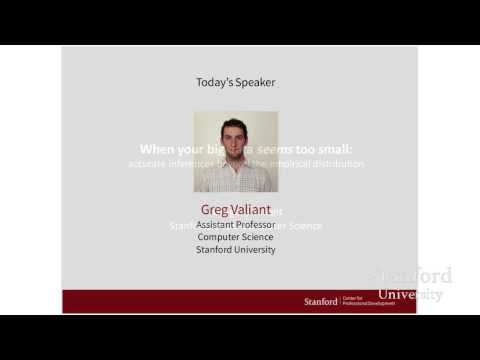
A Stanford Webinar presented by: Stanford's Databases and the Foundations in Computer Science graduate certificate programs "When Your Big Data Seems Too Small - Accurate Inferences Beyond the Empirical Distribution" Speaker: Gregory Valiant, Stanford University Many of the techniques and algorithm…