technifyed

IIT Kharagpur via NPTEL

Operations Research

Overview

Operations Research is a multidisciplinary field that applies analytical methods to help make better management decisions. It is often called the “science of the better” because it focuses on optimising processes, resource allocation, and decision-making to achieve optimal solutions. The course helps solve complex real-world problems using mathematics and domain-specific knowledge.Operations Research bridges the gap between theory and application, enabling systematic and evidence-based decision-making in various domains. It helps organisations deal with complexities, reduce costs, improve productivity, and gain a competitive edge. Its practical and quantitative approach makes it an essential tool for decision-makers.

Syllabus 12

  1. Week 1
    • Lecture 01: OR - Introduction
    • Lecture 02: OR and Systems Approach
    • Lecture 03: Mathematical Modelling Process & Linear Programming
    • Lecture 04: Linear Programming - Problem Formulation
    • Lecture 05: Linear Programming - Problem Formulation
  2. Week 2
    • Lecture 06 : Linear Programming – Graphical Solution I
    • Lecture 07 : Linear Programming – Graphical Solution II
    • Lecture 08 : Linear Program in Standard form
    • Lecture 09 : Linear Programming – Simplex Method I
    • Lecture 10 : Linear Programming – Simplex Method II
  3. Week 3
    • Lecture 11: Linear Programming – Simplex Method
    • Lecture 12: Big-M Simplex Method
    • Lecture 13: Big_M_Practice Problems
    • Lecture 14: Two-Phase Simplex Method
    • Lecture 15: Two-Phase_Practice Problems
  4. Week 4
    • Lecture 16 : Revised Simplex Method I
    • Lecture 17: : Revised Simplex Method II
    • Lecture 18 : Duality Theory
    • Lecture 19 : Dual Simplex Method
    • Lecture 20 : Practice Problems
  5. Week 5
    • Lecture 21: Sensitivity Analysis
    • Lecture 22: Sensitivity Analysis II
    • Lecture 23: Sensitivity Analysis Practice Problems
    • Lecture 24: Case Studies I
    • Lecture 25: Case Studies II
  6. Week 6
    • Lecture 26 : Goal Programming
    • Lecture 27 : Weighted Goal Programming
    • Lecture 28 : Weighted Goal Programming Examples
    • Lecture 29 : Lexicographic Goal Programming
    • Lecture 30 : Example and Case Study
  7. Week 7
    • Lecture 31 : Transportation - Introduction & Mathematical Formulation
    • Lecture 32 : Finding an Initial Basic Feasible Solution
    • Lecture 33 : Degeneracy and Initial Basic Feasible Solution Examples
    • Lecture 34 : Practice Problems
    • Lecture 35 : Finding the Optimal Solution
  8. Week 8
    • Lecture 36: Practice Problems
    • Lecture 37: Practice Problems – Solution Demo
    • Lecture 38: Practice Problems
    • Lecture 39: Case Study Examples
    • Lecture 40: Assignment Problem
  9. Week 9
    • Lecture 41 : Assignment Problem – Practice Problem & Special Cases
    • Lecture 42 : Assignment Problem – Special Cases
    • Lecture 43 : Assignment Case Study & Inventory Control
    • Lecture 44 : EOQ Models
    • Lecture 45 : EOQ Practice Problems
  10. Week 10
    • Lecture 46 : Replacement Theory
    • Lecture 47 : Sequencing Problem
    • Lecture 48 : Queuing Theory - I
    • Lecture 49 : Queuing Theory - II
    • Lecture 50 : Case Study
  11. Week 11
    • Lecture 51: Project Management - Introduction to Network Analysis
    • Lecture 52: Network Analysis - II
    • Lecture 53: Solution by Network Analysis
    • Lecture 54: CPM: Enumerative method
    • Lecture 55: Practice Problems
  12. Week 12
    • Lecture 56: CPM: Mathematical Programming Models I
    • Lecture 57: CPM: Mathematical Programming Models II
    • Lecture 58: Introduction to PERT
    • Lecture 59: Problem Examples on PERT and CPM
    • Lecture 60: Project Management - Case study

Advantages and disadvantages

Advantages

  • Taught by IIT and IISc professors, and it follows the Indian university syllabus closely.
  • All videos and assignments are free on NPTEL and SWAYAM.
  • The certificate is recognised by many Indian universities for credit transfer and by GATE aspirants.
  • Great for GATE and semester exam preparation.
  • Taught by Indian Institute of Technology Kharagpur, one of the strongest names in its field.
  • Completely free.
  • Self-paced: start any time.
  • A clear syllabus (12 parts) you can see before you start.

Disadvantages

  • The certificate needs a proctored exam at a centre, which has a fee.
  • Recorded classroom lectures: thorough, but slower than made-for-online courses.
  • New runs start on fixed dates (January and July).
  • Learning is free, but the certificate costs money.

Some points apply to every course of this kind; see how we rank.

Free to learn

  • Free: Every video and assignment is free on NPTEL and SWAYAM. Enrol when the next run opens.
  • Certificate: Optional. It needs a proctored exam at a centre, which has a fee.

Taught by

  • Prof. Rajendra SinghIIT Kharagpur

Indian Institute of Technology Kharagpur is in Tier 1: world-leading universities and India's top institutes of our institution ranking (95/100).

Similar courses

Compare these

Massachusetts Institute of Technology · YouTube

MIT 6.01SC Introduction to EECS I

Instructor: Dennis Freeman, Kendra Pugh This course provides an integrated introduction to electrical engineering and computer science, including modern software engineering, linear systems analysis, electronic circuits, and decision-making. The lecture videos provide an overview of each topic, whi…

Free video27 videos, 17 hours

Harvard University · edX

Fundamentals of TinyML

4.567 ratings

Focusing on the basics of machine learning and embedded systems, such as smartphones, this course will introduce you to the “language” of TinyML.

Free to audit5 weeks, 2 - 4 hours per week

Massachusetts Institute of Technology · YouTube

MIT 6.832 Underactuated Robotics, Spring 2009

Instructor: Russell Tedrake See the complete course at: http://ocw.mit.edu/6-832s09 Robots today move far too conservatively, using control systems that attempt to maintain full control authority at all times. Humans and animals move much more aggressively by routinely executing motions which invol…

Free video23 videos, 28 hours

Massachusetts Institute of Technology · YouTube

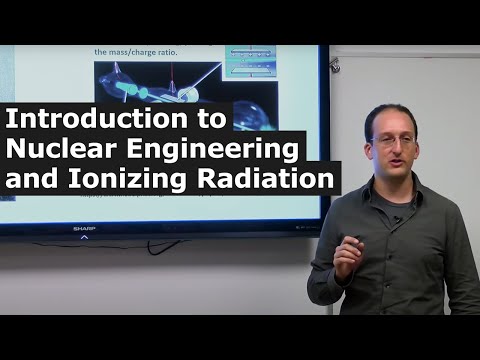
MIT 22.01 Introduction to Nuclear Engineering and Ionizing Radiation, Fall 2016

Instructor: Michael Short View the complete course: https://ocw.mit.edu/22-01F16 This course provides an introduction to nuclear science and its engineering applications. It describes basic nuclear models, radioactivity, nuclear reactions and kinematics; covers the interaction of ionizing radiation…

Free video34 videos, 32 hours

Massachusetts Institute of Technology · YouTube

MIT 6.622 Power Electronics, Spring 2023

Instructor: David Perreault View the complete course: https://ocw.mit.edu/courses/6-622-power-electronics-spring-2023 YouTube Playlist: https://www.youtube.com/playlist?list=PLUl4u3cNGP62UTc77mJoubhDELSC8lfR0 6.622 covers modeling, analysis, design, control, and application of circuits for energy c…

Free video38 videos, 32 hours

Massachusetts Institute of Technology · YouTube

MIT 5.60 Thermodynamics & Kinetics, Spring 2008

Instructors: Moungi Bawendi, Keith Nelson This subject deals primarily with equilibrium properties of macroscopic systems, basic thermodynamics, chemical equilibrium of reactions in gas and solution phase, and rates of chemical reactions. View the complete course at: http://ocw.mit.edu/5-60S08 Lice…

Free video36 videos, 30 hours

Enter your email and the official page opens. Phone is optional.