technifyed

University at Buffalo via Coursera

Solar Energy Codes, Permitting and Zoning

4.7145 ratings at Coursera

Overview

This course equips learners to identify national code and zoning rules specific to photovoltaic (PV) systems, as well as key design elements and points for inspection. Curriculum includes zoning variances, critical elements of the permitting process, planning documents necessary for PV system installation and recommendations for permitting offices to streamline the permit process. Learners gain a code inspector’s perspective in relation to building and electrical code requirements.

This course is for anyone interested in entering the solar power sector, and is especially appropriate for building and code inspectors, engineers, HVAC installers and architects. It assumes that the learner has a basic grasp of electrical engineering and mathematical concepts. Those who are unfamiliar with how PV works, the elements of a PV system, and/or solar power ROI should take the first course of the specialization, Solar Energy Systems Overview. Learners seeking a greater understanding of the anatomy and function of PV systems should take the second course, Solar Energy and Electrical System Design.

Material includes online lectures, videos, demos, hands-on exercises, project work, readings and discussions. This is the third course in the Solar PV for Engineers, Architects and Code Inspectors specialization. To learn more about the specialization, check out a video overview at https://youtu.be/XjkKzbXqA6s.

Syllabus 5

  1. Code and Inspection Requirements 3 hours

    Students will gain an understanding of the many codes impacting solar system design, installation and operation.

  2. Inspection Methods and the Permitting Process 2.5 hours

    Students will review to the types of codes and zoning rules inspectors consider when reviewing PV systems.

  3. Inspection Considerations 4 hours

    Students will explore key PV system design elements and points for inspection.

  4. Labeling Requirements 2 hours

    Students will learn about PV system labeling requirements for small and large systems.

  5. Compliance Project: Theory to Practice 2 hours

Advantages and disadvantages

Advantages

  • Structured courses with graded quizzes, assignments and deadlines you can reset.
  • A shareable certificate from the university or company when you pay.
  • Financial aid is often approved for students in India (apply 15 days before you need it).
  • Rated 4.7 out of 5 by 145 learners.
  • Self-paced: start any time.
  • A clear syllabus (5 parts) you can see before you start.
  • Hands-on: you build or practise, not just watch.

Disadvantages

  • Paid after a 7-day free trial (Coursera Plus or per course).
  • Some courses can be audited for free, but graded work and certificates need payment.

Some points apply to every course of this kind; see how we rank.

This course is paid. Here is how to take it for free

  • Free trials: You can start a 7-day free trial for many individual courses, Specializations, or a Coursera Plus subscription to test full course features. Cancel before the seventh day if you do not want to be charged.
  • Financial aid: If you cannot afford the fee for a certificate, you can apply for financial aid through the link on the course home page by filling out an application about your background and goals.

Taught by

  • Gay E CanoughPartner, Direct Gain Consulting, Founder, ETM Solar Works

The State University of New York is in Tier 3: good universities, respected companies, nonprofits and well-known teachers of our institution ranking (72/100).

Similar courses

Compare these

Massachusetts Institute of Technology · YouTube

MIT 6.01SC Introduction to EECS I

Instructor: Dennis Freeman, Kendra Pugh This course provides an integrated introduction to electrical engineering and computer science, including modern software engineering, linear systems analysis, electronic circuits, and decision-making. The lecture videos provide an overview of each topic, whi…

Free video27 videos, 17 hours

Massachusetts Institute of Technology · YouTube

MIT 6.832 Underactuated Robotics, Spring 2009

Instructor: Russell Tedrake See the complete course at: http://ocw.mit.edu/6-832s09 Robots today move far too conservatively, using control systems that attempt to maintain full control authority at all times. Humans and animals move much more aggressively by routinely executing motions which invol…

Free video23 videos, 28 hours

Massachusetts Institute of Technology · YouTube

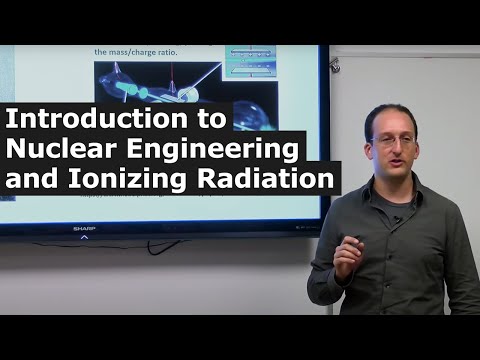
MIT 22.01 Introduction to Nuclear Engineering and Ionizing Radiation, Fall 2016

Instructor: Michael Short View the complete course: https://ocw.mit.edu/22-01F16 This course provides an introduction to nuclear science and its engineering applications. It describes basic nuclear models, radioactivity, nuclear reactions and kinematics; covers the interaction of ionizing radiation…

Free video34 videos, 32 hours

Massachusetts Institute of Technology · YouTube

MIT 6.622 Power Electronics, Spring 2023

Instructor: David Perreault View the complete course: https://ocw.mit.edu/courses/6-622-power-electronics-spring-2023 YouTube Playlist: https://www.youtube.com/playlist?list=PLUl4u3cNGP62UTc77mJoubhDELSC8lfR0 6.622 covers modeling, analysis, design, control, and application of circuits for energy c…

Free video38 videos, 32 hours

Harvard University · edX

Deploying TinyML

4.521 ratings

Learn to program in TensorFlow Lite for microcontrollers so that you can write the code, and deploy your model to your very own tiny microcontroller. Before you know it, you’ll be implementing an entire TinyML application.

Free to audit5 weeks, 2 - 4 hours per week

Harvard University · edX

Super-Earths and Life

4.773 ratings

Learn about the Earth, life, and how we can search for life elsewhere in the universe.

Free to audit

Enter your email and the official page opens. Phone is optional.