technifyed

Stanford University via YouTube Video playlist

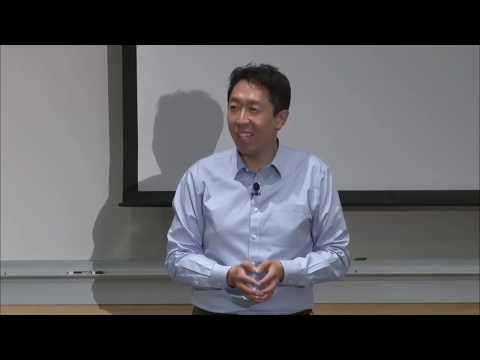
Stanford CS336 Language Modeling from Scratch I 2025

Overview

Language models serve as the cornerstone of modern natural language processing (NLP) applications and open up a new paradigm of having a single general purpose system address a range of downstream tasks. As the field of artificial intelligence (AI), machine learning (ML), and NLP continues to grow, possessing a deep understanding of language models becomes essential for scientists and engineers alike. This course is designed to provide students with a comprehensive understanding of language models by walking them through the entire process of developing their own. Drawing inspiration from operating systems courses that create an entire operating system from scratch, we will lead students through every aspect of language model creation, including data collection and cleansing for pre-training, transformer model construction, model training, and evaluation before deployment. Course Website: https://stanford-cs336.github.io/

Learn more and enroll in the course: https://online.stanford.edu/courses/cs336-language-modeling-scratch

Videos in this playlist 17

  1. Stanford CS336 Language Modeling from Scratch | Spring 2025 | Lecture 1: Overview and Tokenization
  2. Stanford CS336 Language Modeling from Scratch | Spring 2025 | Lec. 2: Pytorch, Resource Accounting
  3. Stanford CS336 Lang. Modeling from Scratch | Spring 2025 | Lec. 3: Architectures, Hyperparameters
  4. Stanford CS336 Language Modeling from Scratch | Spring 2025 | Lecture 4: Mixture of experts
  5. Stanford CS336 I Language Modeling from Scratch | Spring 2025 | Lecture 5: GPUs
  6. Stanford CS336 Language Modeling from Scratch | Spring 2025 | Lecture 6: Kernels, Triton
  7. Stanford CS336 Language Modeling from Scratch | Spring 2025 | Lecture 7: Parallelism 1
  8. Stanford CS336 Language Modeling from Scratch | Spring 2025 | Lecture 8: Parallelism 2
  9. Stanford CS336 Language Modeling from Scratch | Spring 2025 | Lecture 9: Scaling laws 1
  10. Stanford CS336 Language Modeling from Scratch | Spring 2025 | Lecture 10: Inference
  11. Stanford CS336 Language Modeling from Scratch | Spring 2025 | Lecture 11: Scaling laws 2
  12. Stanford CS336 Language Modeling from Scratch | Spring 2025 | Lecture 12: Evaluation
  13. Stanford CS336 Language Modeling from Scratch | Spring 2025 | Lecture 13: Data 1
  14. Stanford CS336 Language Modeling from Scratch | Spring 2025 | Lecture 14: Data 2
  15. Stanford CS336 Language Modeling from Scratch | Spring 2025 | Lecture 15: Alignment - SFT/RLHF
  16. Stanford CS336 Language Modeling from Scratch | Spring 2025 | Lecture 16: Alignment - RL 1
  17. Stanford CS336 Language Modeling from Scratch | Spring 2025 | Lecture 17: Alignment - RL 2

Advantages and disadvantages

Advantages

  • Free and complete: every lecture is in the playlist, in order.
  • Watch at 1.5x, skip what you know, rewatch what you don't.
  • The actual Stanford lectures (CS229, CS224N, CS231N…): the deepest free material on AI anywhere.
  • Taught by Stanford University, one of the strongest names in its field.
  • 769,959 views, so help and notes are easy to find.
  • Completely free.
  • Self-paced: start any time.
  • A clear syllabus (17 videos) you can see before you start.

Disadvantages

  • No certificate, deadlines or graded work.
  • Quality and depth vary: check that the playlist is finished before you start.
  • Graduate level: needs linear algebra, probability and programming first.
  • No certificate.
  • No graded assignments or feedback.

Some points apply to every course of this kind; see how we rank.

Free

  • Free: Watch on YouTube, no account needed.
  • Certificate: None. Code or take notes along to make it stick.

Stanford University is in Tier 1: world-leading universities and India's top institutes of our institution ranking (97/100).

Similar courses

Compare these

Stanford University · YouTube

AI Luminaries

A curated collection of videos featuring top experts in artificial intelligence.

Free video20 videos, 15 hours

Stanford University · YouTube

Generative AI Program

-Learn more and enroll in the program: https://online.stanford.edu/programs/generative-ai-technology-business-and-society-program Recent advancements in generative AI are reshaping industries, pushing technological boundaries, and revolutionizing creative processes. In this fast-changing landscape…

Free video24 videos, 2 hours

Stanford University · YouTube

Artificial Intelligence

For more information about Stanford's Artificial Intelligence programs visit: https://stanford.io/ai Delve into the exciting world of Artificial Intelligence with insights and research from the world's top experts. This playlist offers a comprehensive journey, from foundational machine learning con…

Free video187 videos, 142 hours

Stanford University · YouTube

Stanford CS229: Machine Learning led by Andrew Ng | Autumn 2018

Led by Andrew Ng, this course provides a broad introduction to machine learning and statistical pattern recognition. Topics include: supervised learning (generative/discriminative learning, parametric/non-parametric learning, neural networks, support vector machines); unsupervised learning (cluster…

Free video21 videos, 28 hours

Massachusetts Institute of Technology · YouTube

MIT 6.034 Artificial Intelligence, Fall 2010

View the complete course: http://ocw.mit.edu/6-034F10 Instructor: Patrick Winston In these lectures, Prof. Patrick Winston introduces the 6.034 material from a conceptual, big-picture perspective. Topics include reasoning, search, constraints, learning, representations, architectures, and probabili…

Free video30 videos, 24 hours

Stanford University · YouTube

Large Language Models (LLMs)

Explore the cutting-edge realm of Large Language Models (LLMs) with this expertly curated YouTube playlist. Featuring insights from industry leaders, educational content, and in-depth discussions, this selection highlights the latest advancements in LLM technology.

Free video26 videos, 42 hours

Enter your email and the official page opens. Phone is optional.