technifyedWeekly list

Overview

Build your statistics and probability expertise with this short course from the University of Leeds.

The first week introduces you to statistics as the art and science of learning from data. Through multiple real-life examples, you will explore the differences between data and information, discovering the necessity of statistical models for obtaining objective and reliable inferences. You will consider the meaning of "unbiased" data collection, reflecting on the role of randomization. Exploring various examples of data misrepresentation, misconception, or incompleteness will help develop your statistical intuition and good practice skills, including peer review.

In the second week, you will learn and practice R software skills in RStudio for exploratory data analysis, creating graphical and numerical summaries. The final week will involve completing probability experiments and computer simulations of binomial trials, such as tossing a coin or rolling a die. This will help you develop an intuitive concept of probability, encompassing both frequentist and subjective perspectives. Throughout the course, you will acquire vital statistical skills by practicing techniques and software commands and engaging in discussions with fellow students.

By the end of the course, you will be able to:

- Understand and explain the role of statistical models in making inferences from data.

- Implement appropriate tools for numerical and graphical summaries using RStudio, and interpret the results.

- Evaluate the stability of frequencies in computer simulations through experimental justification and "measurement" of probability.

No matter your current level of mathematical skill, you will find practical and real-life examples of statistics in action within this course.

This course is a taster of the Online MSc in Data Science (Statistics) but it can be completed by learners who want an introduction to programming and explore the basics of Python.

Advantages and disadvantages

Advantages

  • Structured courses with graded quizzes, assignments and deadlines you can reset.
  • A shareable certificate from the university or company when you pay.
  • Financial aid is often approved for students in India (apply 15 days before you need it).
  • Self-paced: start any time.

Disadvantages

  • Paid after a 7-day free trial (Coursera Plus or per course).
  • Some courses can be audited for free, but graded work and certificates need payment.

Some points apply to every course of this kind; see how we rank.

This course is paid. Here is how to take it for free

  • Free trials: You can start a 7-day free trial for many individual courses, Specializations, or a Coursera Plus subscription to test full course features. Cancel before the seventh day if you do not want to be charged.
  • Financial aid: If you cannot afford the fee for a certificate, you can apply for financial aid through the link on the course home page by filling out an application about your background and goals.

University of Leeds is in Tier 3: good universities, respected companies, nonprofits and well-known teachers of our institution ranking (72/100).

Similar courses

Compare these

Massachusetts Institute of Technology

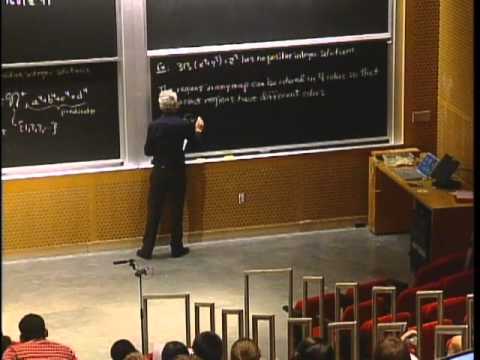
MIT 6.042J Mathematics for Computer Science, Fall 2010

Instructor(s): Tom Leighton, Marten van Dijk This course covers elementary discrete mathematics. Mathematical definitions and proofs are emphasized. Topics include formal logic, induction, graph theory, asymptotic notation and growth of functions, counting principles, and discrete probability.

  • Free video
  • 25 videos, 33 hours

Harvard University

Contract Law: From Trust to Promise to Contract.

4.8516 ratings

Contracts are a part of our everyday life, arising in collaboration, trust, promise and credit. How are contracts formed? What makes a contract enforceable? What happens when one party breaks a promise?

  • Free to audit

Harvard University

Justice

4.8354 ratings

This introduction to moral and political philosophy is one of the most popular courses taught at Harvard College.

  • Free to audit

Harvard University

Introduction to Family Engagement in Education

4.8274 ratings

Learn about successful collaborations between families and educators and why they lead to improved outcomes for students and schools.

  • Free to audit
  • 8 weeks, 2 - 3 hours per week