According to the United States Agency for International Development, 20 million people in developing countries require wheelchairs, and the United Nations Development Programme estimates below 1% of their need is being met in Africa by local production. Wheelchair Design in Developing Countries (WDDC) gives students the chance to better the lives of others by improving wheelchairs and tricycles made in the developing world. Lectures will focus on understanding local factors, such as operating environments, social stigmas against the disabled, and manufacturing constraints, and then applying sound scientific/engineering knowledge to develop appropriate technical solutions. Multidisciplinary student teams will conduct term-long projects on topics such as hardware design, manufacturing optimization, biomechanics modeling, and business plan development. Theory will further be connected to real-world implementation during guest lectures by MIT faculty, Third-World community partners, and U.S. wheelchair organizations.
This class is made possible by an MIT Alumni Sponsored Funding Opportunities grant with additional support from the National Collegiate Inventors and Innovators Alliance (now VentureWell), the MIT Public Service Center, and the MIT Edgerton Center; special thanks to CustomInk.com.
Contracts are a part of our everyday life, arising in collaboration, trust, promise and credit. How are contracts formed? What makes a contract enforceable? What happens when one party breaks a promise?
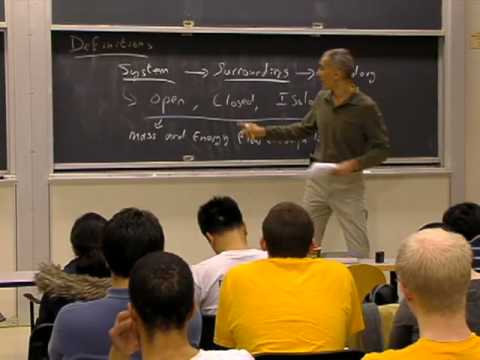
Instructors: Moungi Bawendi, Keith Nelson This subject deals primarily with equilibrium properties of macroscopic systems, basic thermodynamics, chemical equilibrium of reactions in gas and solution phase, and rates of chemical reactions. View the complete course at: http://ocw.mit.edu/5-60S08 Lice…
Our economic institutions, organizations, and skills have not kept up with rapid advances in AI. In this growing gap lie many of society’s greatest challenges and opportunities. This course will explore how AI can and will transform our economy and society in the coming years. Each week, we will le…