 MITx
MITx
Problems of Philosophy
A tour through the big questions of philosophy. Does God exist? Do we have free will? Is morality objective? What is knowledge? What is the meaning of life?
- MIT
- 12 weeks, 3-5 hours per week
- Fixed dates
- Free course
Free online
Learn Anthropology online: university courses, full YouTube courses, and courses with free certificates, from the IITs, MIT, Harvard, Google, Microsoft and more.
MITx
A tour through the big questions of philosophy. Does God exist? Do we have free will? Is morality objective? What is knowledge? What is the meaning of life?
MIT OpenCourseWare
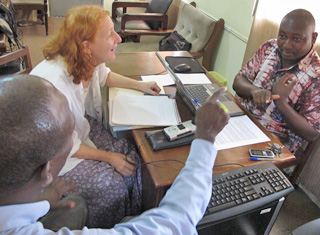
This course enhances cross-cultural understanding through the discussion of practical, ethical, and epistemological issues in conducting social science and applied research in foreign countries or unfamiliar communities. It includes a research practicum to help students develop interviewing, partic…
MIT OpenCourseWare
It has become commonplace knowledge that globalization is one of the major forces shaping our world. If we look at the spread of information, ideas, capital, media, cultural artifacts - or for that matter, people - we can see the boundaries and borders that have historically separated one country o…
MIT OpenCourseWare
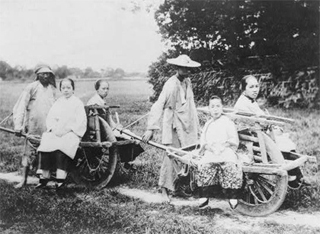
This subject examines the experiences of ordinary Chinese people as they lived through the tumultuous changes of the nineteenth and twentieth centuries. We look at personal narratives, primary sources, films alongside a textbook to think about how individual and family lives connect with the broade…
MIT OpenCourseWare
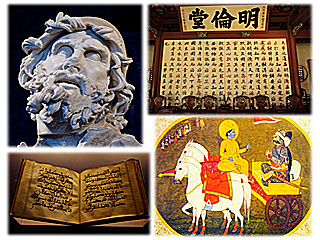
This course aims to introduce students to the rich diversity of human culture from antiquity to the early 17th century. In this course, we will explore human culture in its myriad expressions, focusing on the study of literary, religious and philosophical texts as ways of narrating, symbolizing, an…
MIT OpenCourseWare
This class explores the interrelationship between humans and natural environments. It does so by focusing on conflict over access to and use of the environment as well as ideas about “nature” in various parts of the world.
MIT OpenCourseWare
This subject is an introduction to various forms of culture in East Asia (focusing on China, Japan and Korea), including both traditional and contemporary examples. Critically examines the shared cultural elements that are widely considered to constitute “East Asian culture,” and also the diversity…
MIT OpenCourseWare
This class is a selective survey of Latin American history from the beginning of the twentieth century to the present. Issues studied include Latin America in the global economy, relations between Latin America and the U.S., dictatorships and democracies in the twentieth century, African and Indige…
MIT OpenCourseWare
This advanced course in anthropology engages closely with discussions and debates about ethnographic research, ethics, and representation.
MIT OpenCourseWare
This course introduces academic debates on the nature of capitalism, drawing upon the ideas of scholars as diverse as Adam Smith and Karl Marx. It examines anthropological studies of how contemporary capitalism plays out in people’s daily lives in a range of geographic and social settings, and impl…
MIT OpenCourseWare
This course examines cultural performances of Asia, including both traditional and contemporary forms, in a variety of genres. Students will explore the communicative power of performances with attention to the ways performers, media, cultural settings, and audiences interact. The representation of…
MIT OpenCourseWare
The “Renaissance” as a phenomenon in European history is best understood as a series of social, political, and cultural responses to an intellectual trend which began in Italy in the fourteenth century. This intellectual tendency, known as humanism, or the studia humanitatis, was at the heart of de…
MIT OpenCourseWare
Discerning the ethnic and racial dimensions of politics is considered by some indispensable to understanding contemporary world politics. This course seeks to answer fundamental questions about racial and ethnic politics. To begin, what are the bases of ethnic and racial identities? What accounts f…
MIT OpenCourseWare
Law is a common and yet distinct aspect of everyday life in modern societies. This course examines the central features of law as a social institution and as a feature of popular culture. We will explore the nature of law as a set of social systems, central actors in the systems, legal reasoning, a…
MIT OpenCourseWare
After decades of efforts to promote development, why is there so much poverty in the world? What are some of the root causes of inequality world-wide and why do poverty, economic transformations and development policies often have different consequences for women and men? This course explores these…
MIT OpenCourseWare
This course explores a range of contemporary scholarship oriented to the study of ‘cybercultures,’ with a focus on research inspired by ethnographic and more broadly anthropological perspectives. Taking anthropology as a resource for cultural critique, the course will be organized through a set of…
MIT OpenCourseWare
This course is designed as an introduction to Latin American politics and society for undergraduates at MIT. No background on the region is required. Overall workload (reading, writing, class participation, and examinations) is similar to that of other HASS-D courses. Many of the themes raised here…
MIT OpenCourseWare
In this course we will read essays, novels, memoirs, and graphic texts, and view documentary and experimental films and videos which explore race from the standpoint of the multiracial. Examining the varied work of multiracial authors and filmmakers such as Danzy Senna, Ruth Ozeki, Kip Fulbeck, Jam…
MIT OpenCourseWare
This class is divided into a series of sections or “modules”, each of which concentrates on a particular large technology-related topic in a cultural context. The class will start with a four-week module on Samurai Swords and Blacksmithing, followed by smaller units on Chinese Cooking, the Inventio…
MIT OpenCourseWare
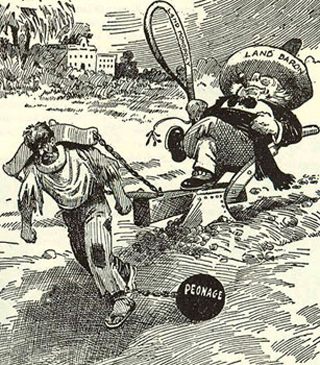
In this course the conquest and colonization of the Americas is considered, with special attention to the struggles of native peoples in Guatemala, Canada, Brazil, Panama, and colonial New England. In two segments of the course-one devoted to the Jesuit missionization of the Huron in the 1630s, the…