
technifyed

Free online

Cognitive Science courses 153

Learn Cognitive Science online: university courses, full YouTube courses, and courses with free certificates, from the IITs, MIT, Harvard, Google, Microsoft and more.

Explore subjects

Showing 153 courses

MIT OpenCourseWare

Advanced Natural Language Processing

This course is a graduate introduction to natural language processing - the study of human language from a computational perspective. It covers syntactic, semantic and discourse processing models, emphasizing machine learning or corpus-based methods and algorithms. It also covers applications of th…

  • MIT
  • Self-paced
  • Free course
  • Advanced

MIT OpenCourseWare

Affective Computing

This course instructs students on how to develop technologies that help people measure and communicate emotion, that respectfully read and that intelligently respond to emotion, and have internal mechanisms inspired by the useful roles emotions play.

  • MIT
  • Self-paced
  • Free course
  • Advanced

MIT OpenCourseWare

Techniques in Artificial Intelligence (SMA 5504)

6.825 is a graduate-level introduction to artificial intelligence. Topics covered include: representation and inference in first-order logic, modern deterministic and decision-theoretic planning techniques, basic supervised learning methods, and Bayesian network inference and learning. This course…

  • MIT
  • Self-paced
  • Free course
  • Advanced

MIT OpenCourseWare

Pattern Recognition for Machine Vision

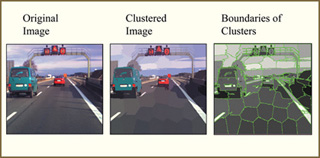
The applications of pattern recognition techniques to problems of machine vision is the main focus for this course. Topics covered include, an overview of problems of machine vision and pattern classification, image formation and processing, feature extraction from images, biological object recogni…

  • MIT
  • Self-paced
  • Free course
  • Advanced

MIT OpenCourseWare

Out of Context: A Course on Computer Systems That Adapt To, and Learn From, Context

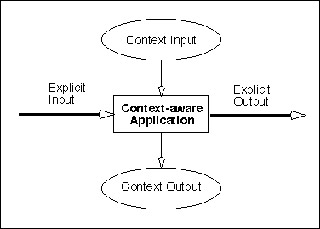
Increasingly, we are realizing that to make computer systems more intelligent and responsive to users, we will have to make them more sensitive to context. Traditional hardware and software design overlooks context because it conceptualizes systems as input-output functions. Systems take input expl…

  • MIT
  • Self-paced
  • Free course
  • Advanced

MITx

Science of Learning and Memory

Explore the fascinating science of learning and memory! Dive into topics like how we learn, classical conditioning, and amnesia. Test your own memory with fun, interactive activities, and discover how the human brain stores, retrieves, and sometimes forgets information.

  • MIT
  • 3 weeks, 2-4 hours per week
  • Self-paced
  • Free to audit
  • Paid certificate

MIT OpenCourseWare

Topics in Statistics: Statistical Learning Theory

The main goal of this course is to study the generalization ability of a number of popular machine learning algorithms such as boosting, support vector machines and neural networks. Topics include Vapnik-Chervonenkis theory, concentration inequalities in product spaces, and other elements of empiri…

  • MIT
  • Self-paced
  • Free course
  • Advanced

MIT OpenCourseWare

Laboratory in Cognitive Science

Teaches principles of experimental methods in human perception and cognition, including design and statistical analysis. Combines lectures and hands-on experimental exercises; requires an independent experimental project. Some experience in programming desirable. To foster improved writing and pres…

  • MIT
  • Self-paced
  • Free course
  • Advanced

MIT OpenCourseWare

Human Memory and Learning

Surveys the literature on the cognitive and neural organization of human memory and learning. Includes consideration of working memory and executive control, episodic and semantic memory, and implicit forms of memory. Emphasizes integration of cognitive theory with recent insights from functional n…

  • MIT
  • Self-paced
  • Free course
  • Advanced

MIT OpenCourseWare

Statistics for Brain and Cognitive Science

Provides students with the basic tools for analyzing experimental data, properly interpreting statistical reports in the literature, and reasoning under uncertain situations. Topics organized around three key theories: Probability, statistical, and the linear model. Probability theory covers axioms…

  • MIT
  • Self-paced
  • Free course
  • Advanced

MIT OpenCourseWare

The Human Intelligence Enterprise

This course analyzes seminal work directed at the development of a computational understanding of human intelligence, such as work on learning, language, vision, event representation, commonsense reasoning, self reflection, story understanding, and analogy. It reviews visionary ideas of Turing, Min…

  • MIT
  • Self-paced
  • Free course
  • Advanced

MIT OpenCourseWare

Natural Language and the Computer Representation of Knowledge

6.863 is a laboratory-oriented course on the theory and practice of building computer systems for human language processing, with an emphasis on the linguistic, cognitive, and engineering foundations for understanding their design.

  • MIT
  • Self-paced
  • Free course
  • Advanced

MIT OpenCourseWare

Modularity, Domain-specificity, and the Organization of Knowledge

This course will consider the degree and nature of the modular organization of the mind and brain. We will focus in detail on the domains of objects, number, places, and people, drawing on evidence from behavioral studies in human infants, children, normal adults, neurological patients, and animals…

  • MIT
  • Self-paced
  • Free course
  • Advanced

MIT OpenCourseWare

Statistical Learning Theory and Applications

Focuses on the problem of supervised learning from the perspective of modern statistical learning theory starting with the theory of multivariate function approximation from sparse data. Develops basic tools such as Regularization including Support Vector Machines for regression and classification.…

  • MIT
  • Self-paced
  • Free course
  • Advanced

MIT OpenCourseWare

Pattern Recognition and Analysis

This class deals with the fundamentals of characterizing and recognizing patterns and features of interest in numerical data. We discuss the basic tools and theory for signal understanding problems with applications to user modeling, affect recognition, speech recognition and understanding, compute…

  • MIT
  • Self-paced
  • Free course
  • Advanced

MIT OpenCourseWare

Transcribing Prosodic Structure of Spoken Utterances with ToBI

This course presents a tutorial on the ToBI (Tones and Break Indices) system, for labelling certain aspects of prosody in Mainstream American English (MAE-ToBI). The course is appropriate for undergrad or grad students with background in linguistics (phonology or phonetics), cognitive psychology (p…

  • MIT
  • Self-paced
  • Free course
  • Advanced

MIT OpenCourseWare

Conversational Computer Systems

This class explores interaction with mobile computing systems and telephones by voice, including speech synthesis, recognition, digital recording, and browsing recorded speech. Emphasis on human interface design issues and interaction techniques appropriate for cognitive requirements of speech. Top…

  • MIT
  • Self-paced
  • Free course
  • Advanced

MIT OpenCourseWare

Machine Learning

6.867 is an introductory course on machine learning which gives an overview of many concepts, techniques, and algorithms in machine learning, beginning with topics such as classification and linear regression and ending up with more recent topics such as boosting, support vector machines, hidden Ma…

  • MIT
  • Self-paced
  • Free course
  • Advanced

MIT OpenCourseWare

Holographic Imaging

MAS.450 is a laboratory course about holography and holographic imaging. This course teaches holography from a scientific and analytical point of view, moving from interference and diffraction to imaging of single points to the display of three-dimensional images. Using a “hands-on” approach, stude…

  • MIT
  • Self-paced
  • Free course
  • Advanced

Enter your email and the official page opens. Phone is optional.