
technifyed

Free online

Linguistics courses 159

Learn Linguistics online: university courses, full YouTube courses, and courses with free certificates, from the IITs, MIT, Harvard, Google, Microsoft and more.

Explore subjects

Showing 159 courses

MIT OpenCourseWare

Ancient Philosophy

This course will acquaint the student with some of the ancient Greek contributions to the Western philosophical and scientific tradition. We will examine a broad range of central philosophical themes concerning: nature, law, justice, knowledge, virtue, happiness, and death. There will be a strong e…

  • MIT
  • Self-paced
  • Free course
  • Advanced

MIT OpenCourseWare

Topics in Linguistic Theory: Propositional Attitudes

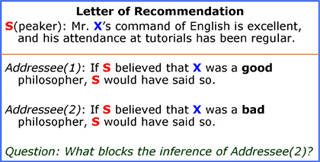
This course explores topics related to the representation and expression of propositional attitudes (e.g. belief, knowledge, and desires) and speech acts (e.g. saying and asking) in natural language. The main focus will be on semantics of predicates such as believe, know, want, say, ask, etc. Other…

  • MIT
  • Self-paced
  • Free course
  • Advanced

MIT OpenCourseWare

Minds and Machines

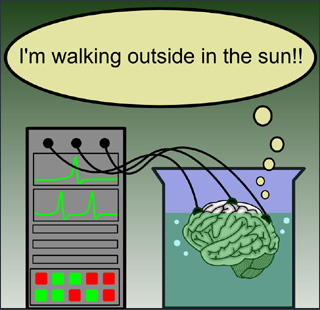
This course is an introduction to many of the central issues in a branch of philosophy called philosophy of mind.

  • MIT
  • Self-paced
  • Free course
  • Advanced

MIT OpenCourseWare

Philosophy In Film and Other Media

This course examines works of film in relation to thematic issues of philosophical importance that also occur in other arts, particularly literature and opera. Emphasis is put on film’s ability to represent and express feeling as well as cognition. Both written and cinematic works by Sturges, Shaw,…

  • MIT
  • Self-paced
  • Free course
  • Advanced

MIT OpenCourseWare

Myth, Ritual, and Symbolism

Human beings are symbol-making as well as tool-making animals. We understand our world and shape our lives in large part by assigning meanings to objects, beings, and persons; by connecting things together in symbolic patterns; and by creating elaborate forms of symbolic action and narrative. In th…

  • MIT
  • Self-paced
  • Free course
  • Advanced

MIT OpenCourseWare

Good Food: Ethics and Politics of Food

This course explores the values (aesthetic, moral, cultural, religious, prudential, political) expressed in the choices of food people eat. Analyzes the decisions individuals make about what to eat, how society should manage food production and consumption collectively, and how reflection on food c…

  • MIT
  • Self-paced
  • Free course
  • Advanced

MIT OpenCourseWare

Topics in Semantics: Negative Polarity Items

This course is concerned with Negative Polarity Items. While raising familiar foundational questions for linguistic theory, Negative Polarity Items enter into complex and often revealing interactions with a host of other phenomena in grammar. Investigating several such interactions, the course touc…

  • MIT
  • Self-paced
  • Free course
  • Advanced

MIT OpenCourseWare

Speech Communication

6.541J surveys the structural properties of natural languages, with special emphasis on the sound pattern. Topics covered include: representation of the lexicon; physiology of speech production; articulatory phonetics; acoustical theory of speech production; acoustical and articulatory descriptions…

  • MIT
  • Self-paced
  • Free course
  • Advanced

MIT OpenCourseWare

Ethnic and National Identity

An introduction to the cross-cultural study of ethnic and national identity. We examine the concept of social identity, and consider the ways in which gendered, linguistic, religious, and ethno-racial identity components interact. We explore the history of nationalism, including the emergence of th…

  • MIT
  • Self-paced
  • Free course
  • Advanced

MIT OpenCourseWare

Pragmatics in Linguistic Theory

The course introduces formal theories of context-dependency, presupposition, implicature, context-change, focus and topic. Special emphasis is on the division of labor between semantics and pragmatics. It also covers applications to the analysis of quantification, definiteness, presupposition proje…

  • MIT
  • Self-paced
  • Free course
  • Advanced

MIT OpenCourseWare

Justice

This course explores the ideal of social justice. What makes a society just? We will approach this question by studying three opposing theories of justice—utilitarianism, libertarianism, and egalitarian liberalism—each foundational to contemporary political thought and discourse.

  • MIT
  • Self-paced
  • Free course
  • Advanced

MIT OpenCourseWare

Portuguese II

This course is a continuation of 21G.801. It focuses on expanding communication skills and further development of linguistic competency using a variety of authentic sources, such as the Internet, audio, video, and printed materials, to help develop cultural awareness and linguistic proficiency. Thi…

  • MIT
  • Self-paced
  • Free course
  • Advanced

MIT OpenCourseWare

Linguistics and Social Justice: Language, Education, and Human Rights

Linguists take it for granted that all languages, including languages in the Global South, are worthy of study. Yet some 40% of children in the world are prevented from studying in and valorizing their home languages—including some of the very languages that linguists study with such fondness. So m…

  • MIT
  • Self-paced
  • Free course
  • Advanced

MIT OpenCourseWare

Decisions, Games, and Rational Choice

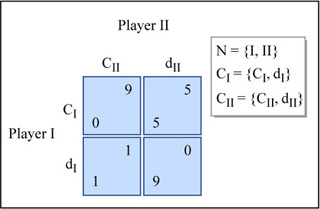
Foundations and philosophical applications of Bayesian decision theory, game theory and theory of collective choice. Why should degrees of belief be probabilities? Is it always rational to maximize expected utility? If so, why and what is its utility? What is a solution to a game? What does a game-…

  • MIT
  • Self-paced
  • Free course
  • Advanced

MIT OpenCourseWare

Theory of Knowledge

This course is an introduction to epistemology: the theory of knowledge. We will focus on skepticism—that is, the thesis that we know nothing at all—and we will survey a range of skeptical arguments and responses to skepticism.

  • MIT
  • Self-paced
  • Free course
  • Advanced

MIT OpenCourseWare

Linguistic Phonetics

This course is about the study of speech sounds; how we produce and perceive them and their acoustic properties. Topics include the influence of the production and perception systems on phonological patterns and sound change, students learn acoustic analysis and experimental techniques. Students ta…

  • MIT
  • Self-paced
  • Free course
  • Advanced

MIT OpenCourseWare

Introduction to Syntax

This course is concerned with the concepts and principles which have been of central significance in the recent development of syntactic theory, with special focus on the “Government and Binding” (GB) / “Principles and Parameters” (P&P) / “Minimalist Program” (MP) approach. It is the first of a ser…

  • MIT
  • Self-paced
  • Free course
  • Advanced

MIT OpenCourseWare

Language Acquisition I

This course focuses on the process by which native speakers of a language acquire the ability to speak and understand that language. It covers some of the major results in the study of first-language acquisition, concentrating on morpho-syntax, semantics, and pragmatics. The findings primarily come…

  • MIT
  • Self-paced
  • Free course
  • Advanced

MIT OpenCourseWare

Introduction to Linguistics

This class provides some answers to basic questions about the nature of human language. Throughout the course, we examine a number of ways in which human language is a complex but law-governed mental system. Much of the class is devoted to studying some core aspects of this system in detail; we als…

  • MIT
  • Self-paced
  • Free course
  • Advanced

MIT OpenCourseWare

Ethics in Your Life: Being, Thinking, Doing (or Not?)

This seminar is made possible through a collaboration between Radius and the Philosophy section of MIT. This course provides an opportunity to explore a wide range of ethical issues through guided discussions that are geared to equip students for ongoing reflection and action. Lectures and discussi…

  • MIT
  • Self-paced
  • Free course
  • Advanced

Enter your email and the official page opens. Phone is optional.