
technifyed

Free online

Physics courses 1,067

Learn Physics online: university courses, full YouTube courses, and courses with free certificates, from the IITs, MIT, Harvard, Google, Microsoft and more.

Explore subjects

Showing 1,067 courses

MIT OpenCourseWare

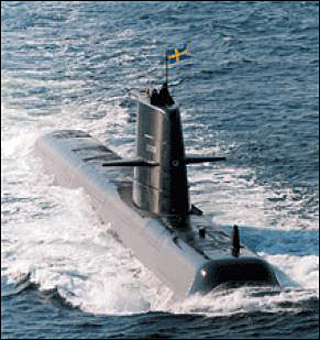
Marine Power and Propulsion

This course discusses the selection and evaluation of commercial and naval ship power and propulsion systems. It will cover the analysis of propulsors, prime mover thermodynamic cycles, propeller-engine matching, propeller selection, waterjet analysis, and reviews alternative propulsors. The course…

  • MIT
  • Self-paced
  • Free course
  • Advanced

The Hong Kong University of Science and Technology

Mastering Statics

4.8240 ratings

Course Overview: https://www.youtube.com/watch?v=sdom7zBIfkE Statics is the most fundamental course in Mechanics. In this course, you will learn the conditions under which an object or a structure subjected to time-invariant (static) forces is in equilibrium - i.e. the conditions under which it rem…

Partner
  • Coursera
  • 7 weeks of study, 4-5 hours/week
  • Self-paced
  • Paid certificate

MIT OpenCourseWare

Dynamics

This course reviews momentum and energy principles, and then covers the following topics: Hamilton’s principle and Lagrange’s equations; three-dimensional kinematics and dynamics of rigid bodies; steady motions and small deviations therefrom, gyroscopic effects, and causes of instability; free and…

  • MIT
  • Self-paced
  • Free course
  • Advanced

Korea Advanced Institute of Science and Technology(KAIST)

Electrodynamics: Electric and Magnetic Fields

4.8236 ratings

This course is a continuation of Electrodynamics: An Introduction and Electrodynamics: Analysis of Electric Fields. Here, we will introduce magnetostatics and relate it to the material we learned previously. In addition, we will cover the basics of the electromotive force and how it can be used to…

Partner
  • Coursera
  • 3-5 hours per week
  • Self-paced
  • Paid certificate

Harvard University

Electrochemistry

4.425 ratings

Learn the significance of electrochemistry, understanding how electrical, chemical, and mechanical energy are linked.

  • edX
  • 10 weeks, 4 - 8 hours per week
  • Self-paced
  • Free to audit
  • Paid certificate
  • Beginner

MIT OpenCourseWare

Electromagnetics and Applications

This course explores electromagnetic phenomena in modern applications, including wireless communications, circuits, computer interconnects and peripherals, optical fiber links and components, microwave communications and radar, antennas, sensors, micro-electromechanical systems, motors, and power g…

  • MIT
  • Self-paced
  • Free course
  • Advanced

Georgia Institute of Technology

Mechanics of Materials III: Beam Bending

4.8956 ratings

This course explores the analysis and design of beam bending problems. Prerequisite Knowledge: You will need to have successfully completed my earlier course “Mechanics of Materials I: Fundamentals of Stress and Strain and Axial Loading” in order to be successful in this course --------------------…

Partner
  • Coursera
  • 5 weeks of material; 5 to 7 hours per week work for students
  • Self-paced
  • Paid certificate

MIT OpenCourseWare

Applied Nuclear Physics

The topics covered under this course include elements of nuclear physics for engineering students, basic properties of the nucleus and nuclear radiations, quantum mechanical calculations of deuteron bound-state wave function and energy, n-p scattering cross-section, transition probability per unit…

  • MIT
  • Self-paced
  • Free course
  • Advanced

MIT OpenCourseWare

Computational Quantum Mechanics of Molecular and Extended Systems

The theoretical frameworks of Hartree-Fock theory and density functional theory are presented in this course as approximate methods to solve the many-electron problem. A variety of ways to incorporate electron correlation are discussed. The application of these techniques to calculate the reactivit…

  • MIT
  • Self-paced
  • Free course
  • Advanced

Georgia Institute of Technology

Mechanics of Materials IV: Deflections, Buckling, Combined Loading & Failure Theories

4.8810 ratings

This course explores the analysis and design of engineering structures considering factors of deflection, buckling, combined loading, & failure theories ------------------------------------------------- The copyright of all content and materials in this course are owned by either the Georgia Tech R…

Partner
  • Coursera
  • 2 weeks of material; 5 to 7 hours per week work for students
  • Self-paced
  • Paid certificate

MIT OpenCourseWare

Nuclear Reactor Safety

Problems in nuclear engineering often involve applying knowledge from many disciplines simultaneously in achieving satisfactory solutions. The course will focus on understanding the complete nuclear reactor system including the balance of plant, support systems and resulting interdependencies affec…

  • MIT
  • Self-paced
  • Free course
  • Advanced

Massachusetts Institute of Technology

MIT Exploring Black Holes: General Relativity & Astrophysics

Study of physical effects in the vicinity of a black hole as a basis for understanding general relativity, astrophysics, and elements of cosmology. Extension to current developments in theory and observation. Energy and momentum in flat spacetime; the metric; curvature of spacetime near rotating an…

Video playlist
  • YouTube
  • 6 videos, 6.5 hours
  • Self-paced
  • Free video

Korea Advanced Institute of Science and Technology(KAIST)

Differential Equations Part I Basic Theory

4.71,442 ratings

This introductory courses on (Ordinary) Differential Equations are mainly for the people, who need differential equations mostly for the practical use in their own fields. So we try to provide basic terminologies, concepts, and methods of solving various types of differential equations as well as a…

Partner
  • Coursera
  • 2-3 hours/week
  • Self-paced
  • Paid certificate

MIT OpenCourseWare

Engineering Mechanics II

This subject provides an introduction to fluid mechanics. Students are introduced to and become familiar with all relevant physical properties and fundamental laws governing the behavior of fluids and learn how to solve a variety of problems of interest to civil and environmental engineers. While t…

  • MIT
  • Self-paced
  • Free course
  • Advanced

MIT OpenCourseWare

Numerical Fluid Mechanics

This course is an introduction to numerical methods and MATLAB®: Errors, condition numbers and roots of equations. Topics covered include Navier-Stokes; direct and iterative methods for linear systems; finite differences for elliptic, parabolic and hyperbolic equations; Fourier decomposition, error…

  • MIT
  • Self-paced
  • Free course
  • Advanced

The University of Edinburgh

AstroTech: The Science and Technology behind Astronomical Discovery

4.71,187 ratings

"How do they know that?" Modern astronomy has made some astonishing discoveries - how stars burn and how black holes form; galaxies from the edge of the universe and killer rocks right next door; where the elements come from and how the expanding universe is accelerating. But how do we know all tha…

Partner
  • Coursera
  • Six weeks of study, requiring roughly 2 hours per week.
  • Self-paced
  • Paid certificate

MIT OpenCourseWare

Crystal Structure Analysis

This course covers the following topics: X-ray diffraction: symmetry, space groups, geometry of diffraction, structure factors, phase problem, direct methods, Patterson methods, electron density maps, structure refinement, how to grow good crystals, powder methods, limits of X-ray diffraction metho…

  • MIT
  • Self-paced
  • Free course
  • Advanced

MIT OpenCourseWare

Computational Mechanics of Materials

16.225 is a graduate level course on Computational Mechanics of Materials. The primary focus of this course is on the teaching of state-of-the-art numerical methods for the analysis of the nonlinear continuum response of materials. The range of material behavior considered in this course includes:…

  • MIT
  • Self-paced
  • Free course
  • Advanced

Rice University

Physics 101 - Forces and Kinematics

4.7209 ratings

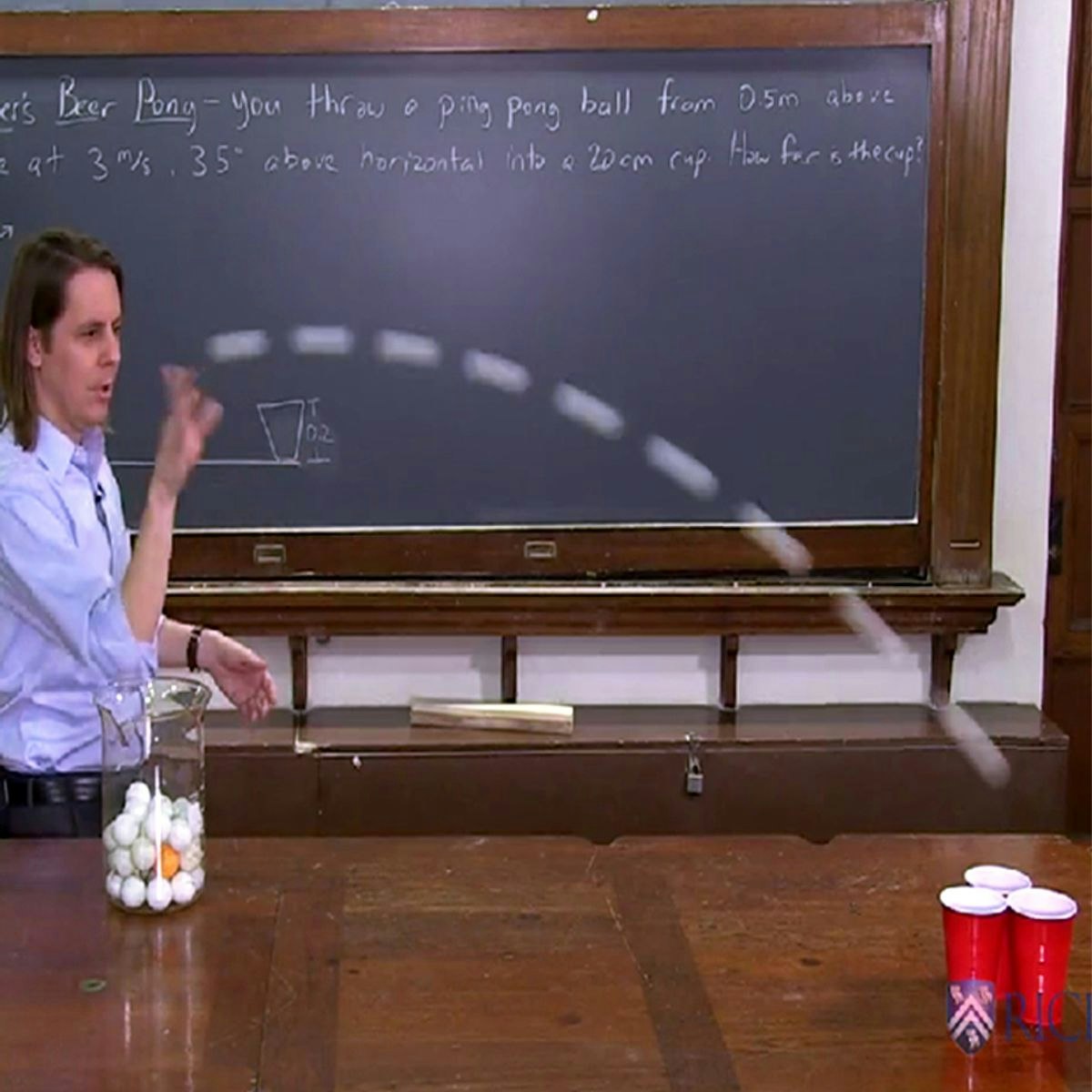
This first course serves as an introduction to the physics of force and motion. Upon completion, learners will understand how mathematical laws and conservation principles describe the motions and interactions of objects around us. Learners will gain experience in solving physics problems with tool…

Partner
  • Coursera
  • 8 weeks, 5 hours per week
  • Self-paced
  • Paid certificate

Enter your email and the official page opens. Phone is optional.