
technifyed

Free online

Software Systems courses 36

Learn Software Systems online: university courses, full YouTube courses, and courses with free certificates, from the IITs, MIT, Harvard, Google, Microsoft and more.

Explore subjects

Showing 36 courses

MIT OpenCourseWare

Adventures in Advanced Symbolic Programming

This course covers concepts and techniques for the design and implementation of large software systems that can be adapted to uses not anticipated by the designer. Applications include compilers, computer-algebra systems, deductive systems, and some artificial intelligence applications. Topics incl…

  • MIT
  • Self-paced
  • Free course
  • Advanced

DeepLearning.AI

AI-Powered Software and System Design

4.7194 ratings

This final course in the skill certificate focuses on applying AI to high-level software engineering tasks. You'll work with LLMs to design and implement sophisticated software systems, optimize code using established design patterns, and create efficient databases from scratch. By the end of this…

Partner
  • Coursera
  • 1 week, 5 hours/week
  • Self-paced
  • Paid certificate

MIT OpenCourseWare

Software Studio

This course on software engineering covers design and implementation of medium-scale software systems, using web applications as a platform. In the course, students learn the fundamentals of structuring a web application and writing modular code, with an emphasis on conceptual design to achieve cla…

  • MIT
  • Self-paced
  • Free course
  • Advanced

MIT OpenCourseWare

Laboratory in Software Engineering

This course introduces concepts and techniques relevant to the production of large software systems. Students are taught a programming method based on the recognition and description of useful abstractions. Topics include modularity, specification, data abstraction, object modeling, design patterns…

  • MIT
  • Self-paced
  • Free course
  • Advanced

The Hong Kong University of Science and Technology

Software Engineering: Modeling Software Systems using UML

4.6393 ratings

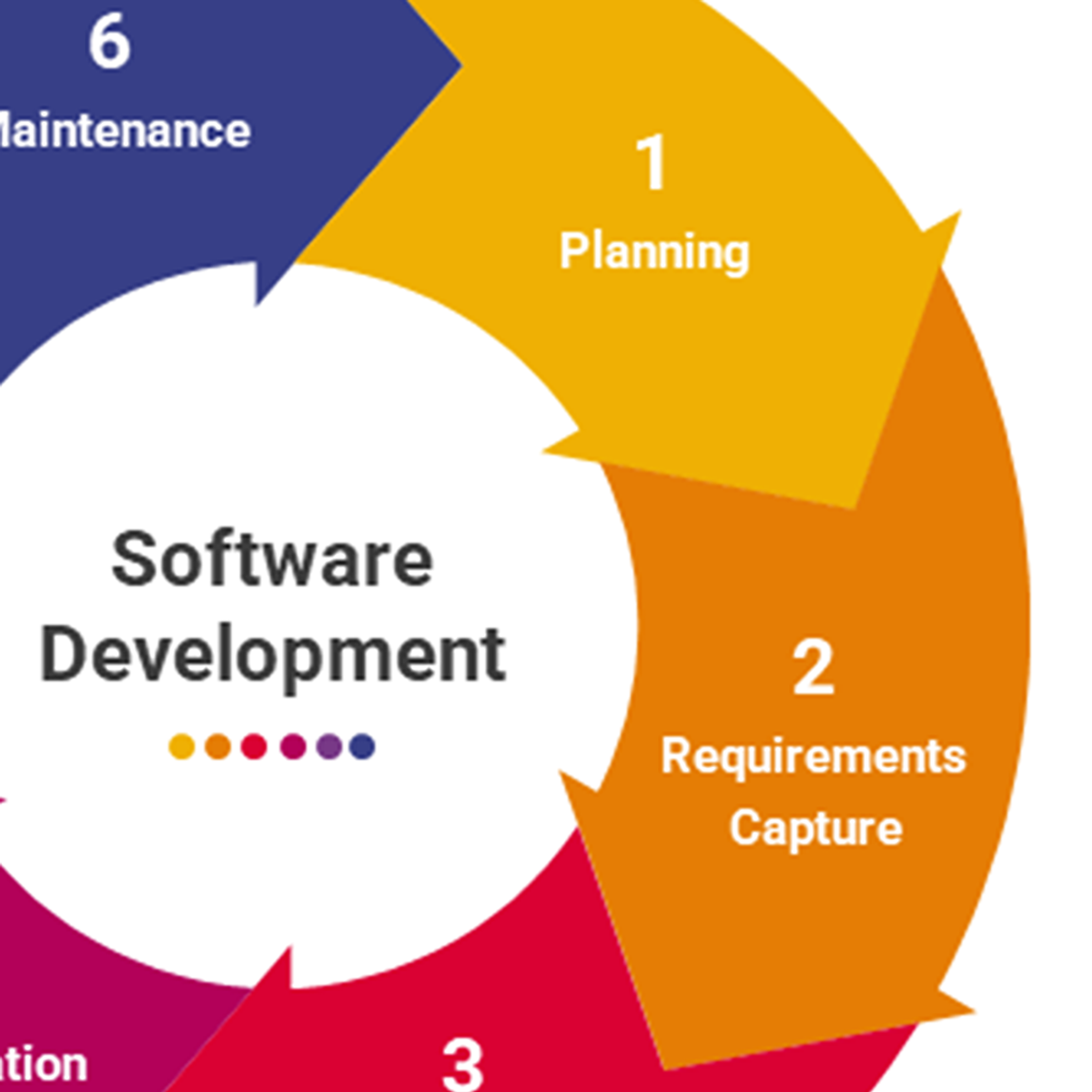
Software Development Life Cycle (SDLC) is the process of developing software through planning, requirement analysis, design, implementation, testing, and maintenance. This course focuses on the requirement analysis phase of SDLC, and you will learn how to use UML models to capture the system requir…

Partner
  • Coursera
  • 28 hours
  • Self-paced
  • Paid certificate

MIT OpenCourseWare

Performance Engineering of Software Systems

6.172 is an 18-unit class that provides a hands-on, project-based introduction to building scalable and high-performance software systems. Topics include performance analysis, algorithmic techniques for high performance, instruction-level optimizations, caching optimizations, parallel programming,…

  • MIT
  • Self-paced
  • Free course
  • Advanced

Massachusetts Institute of Technology

MIT 6.172 Performance Engineering of Software Systems, Fall 2018

Instructor: Charles Leiserson, Julian Shun View the complete course: https://ocw.mit.edu/6-172F18 6.172 provides a hands-on, project-based introduction to building scalable and high-performance software systems. The course programming language is in C. License: Creative Commons BY-NC-SA More inform…

Video playlist
  • YouTube
  • 23 videos, 30 hours
  • Self-paced
  • Free video

Birla Institute of Technology & Science, Pilani

Software Development Practices

Welcome to the Software Development Practices course! In this course, you will explore techniques for eliciting and documenting software requirements, including the creation of use cases and user stories. You will learn to design software systems using visual modeling methods such as UML diagrams a…

Partner
  • Coursera
  • 45 hours
  • Self-paced
  • Paid certificate

University of British Columbia

Software Engineering: Introduction

4.320 ratings

Learn software engineering principles that are applicable to the breadth of large-scale software systems.

  • edX
  • 8 weeks, 6 - 7 hours per week
  • Self-paced
  • Free to audit
  • Paid certificate
  • Advanced

Great Learning

Getting Started with Agentic AI

4.5397 ratings

The building agentic AI free course equips you with the essential skills to understand how AI agents work, make decisions, and support modern software systems. You’ll learn what AI agents are, how they operate, and how they use planning, reasoning, execution, and memory to complete tasks. The cours…

  • Great Learning Academy
  • 9 hours
  • Self-paced
  • Free course
  • Free certificate
  • Beginner

The Hong Kong University of Science and Technology

Software Engineering

Getting Started as a Software Engineer

PartnerLearning path or series
  • Coursera
  • Self-paced
  • Paid certificate

Massachusetts Institute of Technology

MIT 6.172 Performance Engineering of Software Systems

Instructors: Saman Amarasinghe, Charles Leiserson This class is a hands-on, project-based introduction to building scalable and high-performance software systems. Topics include performance analysis, algorithmic techniques for high performance, instruction-level optimizations, cache and memory hier…

Video playlist
  • YouTube
  • 24 videos, 29 hours
  • Self-paced
  • Free video

University of British Columbia

Software Construction: Object-Oriented Design

3.25 ratings

Learn how to design large software systems that solve real-world problems using object-oriented design techniques.

  • edX
  • 6 weeks, 6 - 7 hours per week
  • Self-paced
  • Free to audit
  • Paid certificate
  • Intermediate

University of Maryland, College Park

Cybersecurity Capstone Project

4.3158 ratings

This course presents an intensive experience during which students build a software system they intend to be secure, and then attempt to show that other students' projects are insecure, by finding flaws in them. A Note on Capstone Frequency: Please note that sessions of this Cybersecurity Capstone…

Partner
  • Coursera
  • 4.5 hours
  • Self-paced
  • Paid certificate

University of British Columbia

Software Construction: Data Abstraction

4.85 ratings

Learn powerful data abstraction and decomposition techniques to build large, complex programs.

  • edX
  • 6 weeks, 6 - 7 hours per week
  • Self-paced
  • Free to audit
  • Paid certificate
  • Beginner

Delft University of Technology

Unix Tools: Data, Software and Production Engineering

Grow from being a Unix novice to Unix wizard status! Process big data, analyze software code, run DevOps tasks and excel in your everyday job through the amazing power of the Unix shell and command-line tools.

  • edX
  • Self-paced
  • Free to audit
  • Paid certificate
  • Intermediate

Northeastern University

Software Testing for Engineers Part 2

This course is best suited for software engineering students and professionals who wish to develop expertise in systematic testing methodologies and quality assurance practices to ensure reliable software systems. This course will offer you an opportunity to learn fundamental testing concepts requi…

Partner
  • Coursera
  • 21 hours
  • Self-paced
  • Paid certificate

MIT OpenCourseWare

Software Engineering Concepts

This is a reading and discussion subject on issues in the engineering of software systems and software development project design. It includes the present state of software engineering, what has been tried in the past, what worked, what did not, and why. Topics may differ in each offering, but will…

  • MIT
  • Self-paced
  • Free course
  • Advanced

Tech With Tim

Software Design Tutorial #1 - Software Engineering & Software Architecture

In this video I will be teaching you the basics of designing software systems like a software engineer. We will walk through a design problem and use software engineering skills and techniques to design an example system. We will create a UML class diagram and transform textual requirements to a pl…

Free video
  • YouTube
  • 40 minutes
  • Self-paced
  • Free video

University of Colorado Boulder

Real-Time Mission-Critical Systems Design

4.420 ratings

This course can also be taken for academic credit as ECEA 5317, part of CU Boulder’s Master of Science in Electrical Engineering degree. Upon completion of this course the learner will know the difference between systems you can bet your life on (mission critical) and those which provide predictabl…

Partner
  • Coursera
  • 50 to 75 hours
  • Self-paced
  • Paid certificate

Enter your email and the official page opens. Phone is optional.