technifyed

Free online

Systems Thinking courses 139

Learn Systems Thinking online: university courses, full YouTube courses, and courses with free certificates, from the IITs, MIT, Harvard, Google, Microsoft and more.

Explore subjects

Showing 139 courses

Yale University

Connected Leadership

4.8795 ratings

In an ever-changing and digitally connected world, the need for human centered and connected leadership is crucial. This course is designed to maximize your ability to create change at the individual, team and system levels. Through study, reflection, and deploying practical tools, you will establi…

Partner
  • Coursera
  • 5 weeks of study, 3 hours per week
  • Self-paced
  • Paid certificate

MIT OpenCourseWare

Communication System Design

This course presents a top-down approach to communications system design. The course will cover communication theory, algorithms and implementation architectures for essential blocks in modern physical-layer communication systems (coders and decoders, filters, multi-tone modulation, synchronization…

  • MIT
  • Self-paced
  • Free course
  • Advanced

MIT OpenCourseWare

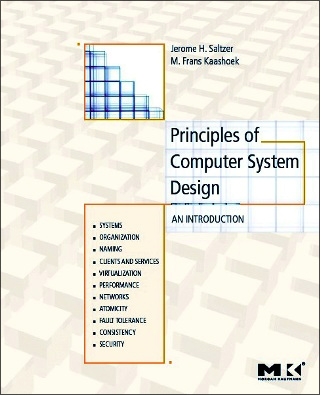
Principles of Computer System Design: An Introduction

Principles of Computer System Design: An Introduction is published in two parts. Part I, containing chapters 1-6, is a traditional printed textbook published by Morgan Kaufman, an imprint of Elsevier. Part II, containing chapters 7-11, is available here as an open educational resource. This textboo…

  • MIT
  • Self-paced
  • Free course
  • Advanced

Johns Hopkins University

Patient Safety and Quality Improvement: Developing a Systems View (Patient Safety I)

4.81,574 ratings

In this course, you will be able develop a systems view for patient safety and quality improvement in healthcare. By then end of this course, you will be able to: 1) Describe a minimum of four key events in the history of patient safety and quality improvement, 2) define the key characteristics of…

Partner
  • Coursera
  • 5.5 hours
  • Self-paced
  • Paid certificate

MIT OpenCourseWare

Performance Engineering of Software Systems

6.172 is an 18-unit class that provides a hands-on, project-based introduction to building scalable and high-performance software systems. Topics include performance analysis, algorithmic techniques for high performance, instruction-level optimizations, caching optimizations, parallel programming,…

  • MIT
  • Self-paced
  • Free course
  • Advanced

MITx

Design Thinking for Leading and Learning

A hands-on course for education leaders to learn about design thinking and explore how it can transform classroom learning and school communities.

  • MIT
  • 6 weeks, 5 hours/week
  • Self-paced
  • Free course
  • Advanced

Princeton University

Global Systemic Risk

4.7467 ratings

What is globalization and how does it work? How can we understand the process as a whole? How are the parts of the world linked? What are the risks of living in a world where “no one is in charge”? This course introduces students to systems thinking, network theory, and risk analysis and uses these…

Partner
  • Coursera
  • 21 hours
  • Self-paced
  • Paid certificate

MIT OpenCourseWare

Design of Electromechanical Robotic Systems

This course covers the design, construction, and testing of field robotic systems, through team projects with each student responsible for a specific subsystem. Projects focus on electronics, instrumentation, and machine elements. Design for operation in uncertain conditions is a focus point, with…

  • MIT
  • Self-paced
  • Free course
  • Advanced

MIT OpenCourseWare

Nuclear Systems Design Project

This capstone course is a group design project involving integration of nuclear physics, particle transport, control, heat transfer, safety, instrumentation, materials, environmental impact, and economic optimization. It provides opportunities to synthesize knowledge acquired in nuclear and non-nuc…

  • MIT
  • Self-paced
  • Free course
  • Advanced

Udacity

Software Development Process Overview Course

The "Software Development Process" course offers a deep dive into the integral facets of software engineering. Starting with the fundamentals of software architecture and systems engineering, students will learn how to analyze requirements and create system models effectively. The course emphasizes…

Partner
  • Udacity
  • P2W
  • Self-paced
  • Beginner

MIT OpenCourseWare

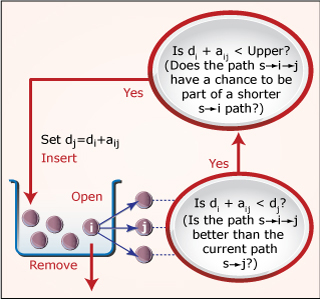
Topics in Combinatorial Optimization

In this graduate-level course, we will be covering advanced topics in combinatorial optimization. We will start with non-bipartite matchings and cover many results extending the fundamental results of matchings, flows and matroids. The emphasis is on the derivation of purely combinatorial results,…

  • MIT
  • Self-paced
  • Free course
  • Advanced

MIT OpenCourseWare

Dynamic Programming and Stochastic Control

The course covers the basic models and solution techniques for problems of sequential decision making under uncertainty (stochastic control). We will consider optimal control of a dynamical system over both a finite and an infinite number of stages. This includes systems with finite or infinite sta…

  • MIT
  • Self-paced
  • Free course
  • Advanced

Duke University

Developing Explainable AI (XAI)

4.670 ratings

As Artificial Intelligence (AI) becomes integrated into high-risk domains like healthcare, finance, and criminal justice, it is critical that those responsible for building these systems think outside the black box and develop systems that are not only accurate, but also transparent and trustworthy…

Partner
  • Coursera
  • 3 weeks of study, 2-4 hours/week
  • Self-paced
  • Paid certificate

MIT OpenCourseWare

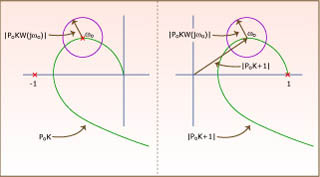
Dynamic Systems and Control

The course addresses dynamic systems, i.e., systems that evolve with time. Typically these systems have inputs and outputs; it is of interest to understand how the input affects the output (or, vice-versa, what inputs should be given to generate a desired output). In particular, we will concentrate…

  • MIT
  • Self-paced
  • Free course
  • Advanced

MIT OpenCourseWare

Systems Optimization: Models and Computation (SMA 5223)

This class is an applications-oriented course covering the modeling of large-scale systems in decision-making domains and the optimization of such systems using state-of-the-art optimization tools. Application domains include: transportation and logistics planning, pattern classification and image…

  • MIT
  • Self-paced
  • Free course
  • Advanced

Duke University

Explainable Machine Learning (XAI)

4.729 ratings

As Artificial Intelligence (AI) becomes integrated into high-risk domains like healthcare, finance, and criminal justice, it is critical that those responsible for building these systems think outside the black box and develop systems that are not only accurate, but also transparent and trustworthy…

Partner
  • Coursera
  • 3 weeks of study, 4-6 hours per week
  • Self-paced
  • Paid certificate

Massachusetts Institute of Technology

System Dynamics: Systems Thinking and Modeling for a Complex World

MIT RES.15-004 System Dynamics: Systems Thinking and Modeling for a Complex World, IAP 2020 Instructor: James Paine View the complete course: https://ocw.mit.edu/RES-15-004IAP20 YouTube Playlist: https://www.youtube.com/playlist?list=PLUl4u3cNGP63Dur3imUjY08z92ypMphQ3 This one-day workshop explores…

Free video
  • YouTube
  • 55 minutes
  • Self-paced
  • Free video

MIT OpenCourseWare

Quantifying Uncertainty

The ability to quantify the uncertainty in our models of nature is fundamental to many inference problems in Science and Engineering. In this course, we study advanced methods to represent, sample, update and propagate uncertainty. This is a “hands on” course: Methodology will be coupled with appli…

  • MIT
  • Self-paced
  • Free course
  • Advanced

Duke University

Interpretable Machine Learning

4.633 ratings

As Artificial Intelligence (AI) becomes integrated into high-risk domains like healthcare, finance, and criminal justice, it is critical that those responsible for building these systems think outside the black box and develop systems that are not only accurate, but also transparent and trustworthy…

Partner
  • Coursera
  • 3 weeks of study, 4-6 hours/week
  • Self-paced
  • Paid certificate

Enter your email and the official page opens. Phone is optional.