
technifyed

Free online

Cognitive Science courses 153

Learn Cognitive Science online: university courses, full YouTube courses, and courses with free certificates, from the IITs, MIT, Harvard, Google, Microsoft and more.

Explore subjects

Showing 153 courses

MIT OpenCourseWare

Marathon Moral Reasoning Laboratory

This seminar focuses on the cognitive science of moral reasoning. Philosophers debate how we decide which moral actions are permissible. Is it permissible to take one human life in order to save others? We have powerful and surprisingly rich and subtle intuitions to such questions. In this class, y…

  • MIT
  • Self-paced
  • Free course
  • Advanced

MIT OpenCourseWare

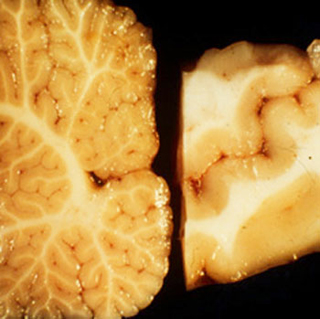
Introduction to Neuroanatomy

This subject will be an intensive introduction to neuroanatomy, involving lectures, demonstrations, and hands-on laboratories, including a brain dissection. The course will not assume any prior knowledge of neuroanatomy, though some general knowledge of brain structures will be helpful.

  • MIT
  • Self-paced
  • Free course
  • Advanced

Massachusetts Institute of Technology

Lecture 12: Spinal Cord; Autonomic NS

MIT 9.01 Neuroscience and Behavior, Fall 2003 Instructor: Prof. Gerald E. Schneider View the complete course: http://ocw.mit.edu/courses/brain-and-cognitive-sciences/9-01-neuroscience-and-behavior-fall-2003 YouTube Playlist: https://www.youtube.com/playlist?list=PLUl4u3cNGP63U7FmbKD9KClb-94dyPJim S…

Free video
  • YouTube
  • 45 minutes
  • Self-paced
  • Free video

MIT OpenCourseWare

Special Topics: Social Animals

Humans are social animals; social demands, both cooperative and competitive, structure our development, our brain and our mind. This course covers social development, social behaviour, social cognition and social neuroscience, in both human and non-human social animals. Topics include altruism, emp…

  • MIT
  • Self-paced
  • Free course
  • Advanced

MIT OpenCourseWare

Lab in Psycholinguistics

Hands-on experience designing, conducting, analyzing, and presenting experiments on the structure and processing of human language. Focuses on constructing, conducting, analyzing, and presenting an original and independent experimental project of publishable quality. Develops skills in reading and…

  • MIT
  • Self-paced
  • Free course
  • Advanced

MIT OpenCourseWare

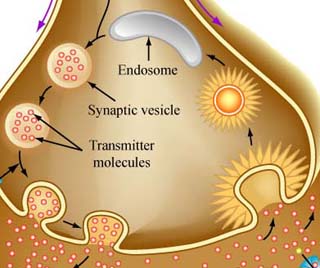
Neuropharmacology

The neuropharmacology course will discuss the drug-induced changes in functioning of the nervous system. The specific focus of this course will be to provide a description of the cellular and molecular actions of drugs on synaptic transmission. This course will also refer to specific diseases of th…

  • MIT
  • Self-paced
  • Free course
  • Advanced

MIT OpenCourseWare

Abnormal Language

Introduction to the linguistic study of language pathology, concentrating on experimental approaches and theoretical explanations. Discussion of Specific Language Impairment, autism, Down syndrome, Williams syndrome, normal aging, Parkinson’s disease, Alzheimer’s disease, hemispherectomy and aphasi…

  • MIT
  • Self-paced
  • Free course
  • Advanced

MIT OpenCourseWare

Systems Neuroscience Lab

Systems Neuroscience Laboratory consists of a series of laboratories designed to give students experience with basic techniques for conducting systems neuroscience research. It includes sessions on anatomical, neurophysiological, and data acquisition and analysis techniques, and the ways these tech…

  • MIT
  • Self-paced
  • Free course
  • Advanced

MIT OpenCourseWare

Interdisciplinary Approaches to Musical Time

This course is an interdisciplinary exploration of three broad topics concerning music in relation to time. Music as Architecture: the creation of musical shapes in time; Music as Memory: how musical understanding depends upon memory and reminiscence, with attention to analysis of musical structure…

  • MIT
  • Self-paced
  • Free course
  • Advanced

MIT OpenCourseWare

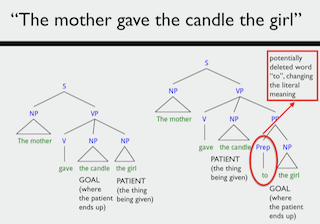
Language Acquisition

Covers the major results in the study of first language acquisition concentrating on the development of linguistic structure, including sentence structure and morphology. Universal aspects of development are discussed, as well as a variety of cross-linguistic phenomena. Theories of language learnin…

  • MIT
  • Self-paced
  • Free course
  • Advanced

MIT OpenCourseWare

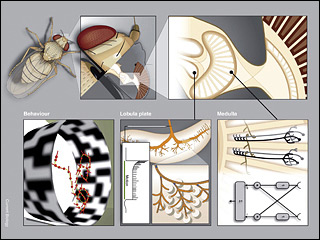
Sensory Systems

This course examines the neural bases of sensory perception. The focus is on physiological and anatomical studies of the mammalian nervous system as well as behavioral studies of animals and humans. Topics include visual pattern, color and depth perception, auditory responses and sound localization…

  • MIT
  • Self-paced
  • Free course
  • Advanced

MIT OpenCourseWare

Laboratory in Visual Cognition

9.63 teaches principles of experimental methods in human perception and cognition, including design and statistical analysis. The course combines lectures and hands-on experimental exercises and requires an independent experimental project. Some experience in programming is desirable. To foster imp…

  • MIT
  • Self-paced
  • Free course
  • Advanced

MIT OpenCourseWare

The Neural Basis of Visual Object Recognition in Monkeys and Humans

Understanding the brain’s remarkable ability for visual object recognition is one of the greatest challenges of brain research. The goal of this course is to provide an overview of key issues of object representation and to survey data from primate physiology and human fMRI that bear on those issue…

  • MIT
  • Self-paced
  • Free course
  • Advanced

MIT OpenCourseWare

Topics in Brain and Cognitive Sciences Human Ethology

Survey and special topics designed for students in Brain and Cognitive Sciences. Emphasizes ethological studies of natural behavior patterns and their analysis in laboratory work, with contributions from field biology (mammology, primatology), sociobiology, and comparative psychology. Stresses huma…

  • MIT
  • Self-paced
  • Free course
  • Advanced

MIT OpenCourseWare

Minds and Machines

This course is an introduction to many of the central issues in a branch of philosophy called philosophy of mind.

  • MIT
  • Self-paced
  • Free course
  • Advanced

MIT OpenCourseWare

Gödel, Escher, Bach

How are math, art, music, and language intertwined? How does intelligent behavior arise from its component parts? Can computers think? Can brains compute? Douglas Hofstadter probes very cleverly at these questions and more in his Pulitzer Prize winning book, “Gödel, Escher, Bach”. In this seminar,…

  • MIT
  • Self-paced
  • Free course
  • Advanced

MIT OpenCourseWare

Noninvasive Imaging in Biology and Medicine

22.56J aims to give graduate students and advanced undergraduates background in the theory and application of noninvasive imaging methods to biology and medicine, with emphasis on neuroimaging. The course focuses on the modalities most frequently used in scientific research (X-ray CT, PET/SPECT, MR…

  • MIT
  • Self-paced
  • Free course
  • Advanced

MIT OpenCourseWare

Cellular Neurophysiology

This course includes: Surveying the molecular and cellular mechanisms of neuronal communication. Coversion channels in excitable membrane, synaptic transmission, and synaptic plasticity. Correlation of the properties of ion channels and synaptic transmission with their physiological function such a…

  • MIT
  • Self-paced
  • Free course
  • Advanced

MIT OpenCourseWare

Neurotechnology in Action

This course, as a part of MIT’s Center for Neurobiological Engineering curriculum, explores cutting-edge neurotechnology that is essential for advances in all aspects of neuroscience, including improvements in existing methods as well as the development, testing and discussion of completely new par…

  • MIT
  • Self-paced
  • Free course
  • Advanced

MIT OpenCourseWare

Brain Mechanisms for Hearing and Speech

An advanced course covering anatomical, physiological, behavioral, and computational studies of the central nervous system relevant to speech and hearing. Students learn primarily by discussions of scientific papers on topics of current interest. Recent topics include cell types and neural circuits…

  • MIT
  • Self-paced
  • Free course
  • Advanced

Enter your email and the official page opens. Phone is optional.