technifyed

Free online

Systems Engineering courses 249

Learn Systems Engineering online: university courses, full YouTube courses, and courses with free certificates, from the IITs, MIT, Harvard, Google, Microsoft and more.

Explore subjects

Showing 249 courses

MIT OpenCourseWare

Inquiry into Computation and Design

This subject explores the varied nature and practice of computation in design. We will view computation and design broadly. Computation will include both work done on the computer (digital computing) and by-hand. Design will include both the process of making designs and artifacts, as well as the d…

  • MIT
  • Self-paced
  • Free course
  • Advanced

Johns Hopkins University

Foundations of Healthcare Systems Engineering

4.7307 ratings

Through dynamic video lectures and practical application questions, you will learn about the Foundations of Healthcare Systems Engineering. In this course you will learn about the current lack of synchronized, efficient, and integrated healthcare systems, which are some of the drivers for improveme…

Partner
  • Coursera
  • 5.5 hours
  • Self-paced
  • Paid certificate

MIT OpenCourseWare

Computer Algorithms in Systems Engineering

This course covers concepts of computation used in analysis of engineering systems. It includes the following topics: data structures, relational database representations of engineering data, algorithms for the solution and optimization of engineering system designs (greedy, dynamic programming, br…

  • MIT
  • Self-paced
  • Free course
  • Advanced

MIT OpenCourseWare

Communication System Design

This course presents a top-down approach to communications system design. The course will cover communication theory, algorithms and implementation architectures for essential blocks in modern physical-layer communication systems (coders and decoders, filters, multi-tone modulation, synchronization…

  • MIT
  • Self-paced
  • Free course
  • Advanced

Georgia Institute of Technology

Network Function Virtualization

4.835 ratings

This course covers Network Function Virtualization from the perspective of a systems engineer. It first discusses the proliferation of middleboxes in enterprise networks and the necessity of virtualizing these components just like software applications. It then details several optimizations in oper…

Partner
  • Coursera
  • 8 hours
  • Self-paced
  • Paid certificate

MIT OpenCourseWare

Introduction to Mathematical Programming

This course is an introduction to linear optimization and its extensions emphasizing the underlying mathematical structures, geometrical ideas, algorithms and solutions of practical problems. The topics covered include: formulations, the geometry of linear optimization, duality theory, the simplex…

  • MIT
  • Self-paced
  • Free course
  • Advanced

MIT OpenCourseWare

Computational Methods of Scientific Programming

This course introduces programming languages and techniques used by physical scientists: FORTRAN, C, C++, MATLAB®, and Mathematica. Emphasis is placed on program design, algorithm development and verification, and comparative advantages and disadvantages of different languages.

  • MIT
  • Self-paced
  • Free course
  • Advanced

Cisco Learning and Certifications

Introduction to Network Automation

4.694 ratings

Modern networks are shifting from manual CLI management to automated, API-driven operations—and this course shows you how to make that transition with confidence. Designed for network engineers, systems engineers, network architects, and technical managers, this network automation course introduces…

Partner
  • Coursera
  • 3 hours
  • Self-paced
  • Paid certificate

MIT OpenCourseWare

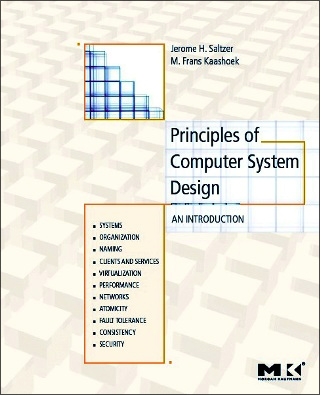
Principles of Computer System Design: An Introduction

Principles of Computer System Design: An Introduction is published in two parts. Part I, containing chapters 1-6, is a traditional printed textbook published by Morgan Kaufman, an imprint of Elsevier. Part II, containing chapters 7-11, is available here as an open educational resource. This textboo…

  • MIT
  • Self-paced
  • Free course
  • Advanced

MIT OpenCourseWare

Introduction to Computers and Engineering Problem Solving

This course presents the fundamentals of object-oriented software design and development, computational methods and sensing for engineering, and scientific and managerial applications. It cover topics, including design of classes, inheritance, graphical user interfaces, numerical methods, streams,…

  • MIT
  • Self-paced
  • Free course
  • Advanced

Udacity

Software Development Process Overview Course

The "Software Development Process" course offers a deep dive into the integral facets of software engineering. Starting with the fundamentals of software architecture and systems engineering, students will learn how to analyze requirements and create system models effectively. The course emphasizes…

Partner
  • Udacity
  • P2W
  • Self-paced
  • Beginner

MIT OpenCourseWare

Representation and Modeling for Image Analysis

Most algorithms in computer vision and image analysis can be understood in terms of two important components: a representation and a modeling/estimation algorithm. The representation defines what information is important about the objects and is used to describe them. The modeling techniques extrac…

  • MIT
  • Self-paced
  • Free course
  • Advanced

MIT OpenCourseWare

Operating System Engineering

This course studies fundamental design and implementation ideas in the engineering of operating systems. Lectures are based on a study of UNIX and research papers. Topics include virtual memory, threads, context switches, kernels, interrupts, system calls, interprocess communication, coordination,…

  • MIT
  • Self-paced
  • Free course
  • Advanced

MathWorks

Systems Engineering

4.8296 ratings

Systems Engineering provides a broad overview of how systems engineering helps you develop complex projects that meet program objectives in an efficient way. You will learn how system architectures are developed and described, how to communicate the needs, requirements, and constraints throughout t…

Partner
  • Coursera
  • Less than 2 hours.
  • Self-paced
  • Paid certificate

MIT OpenCourseWare

Systems Engineering

Systems engineering is an interdisciplinary approach and means to enable the realization of successful systems. It focuses on defining customer needs and required functionality early in the development cycle, documenting requirements, then proceeding with design synthesis and reliability improvemen…

  • MIT
  • Self-paced
  • Free course
  • Advanced

MIT OpenCourseWare

Performance Engineering of Software Systems

6.172 is an 18-unit class that provides a hands-on, project-based introduction to building scalable and high-performance software systems. Topics include performance analysis, algorithmic techniques for high performance, instruction-level optimizations, caching optimizations, parallel programming,…

  • MIT
  • Self-paced
  • Free course
  • Advanced

UNSW Sydney (The University of New South Wales)

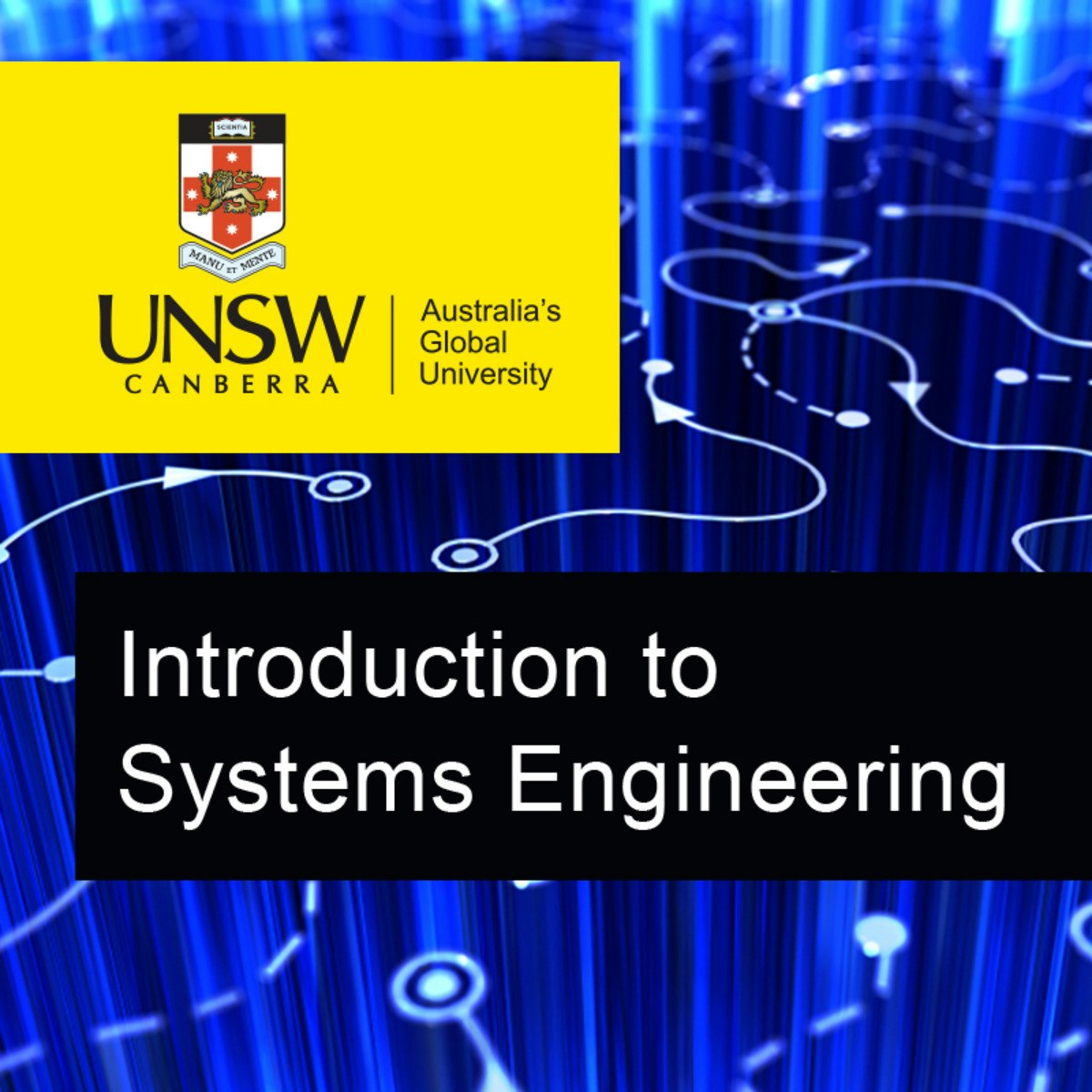
Introduction to Systems Engineering

4.7837 ratings

Gain a foundational understanding of Systems Engineering, essential for the successful development of complex systems. This course guides you through the system design and life cycle, from initial design and architecture to development, production, and ongoing management. Understand how system comp…

Partner
  • Coursera
  • 23 hours
  • Self-paced
  • Paid certificate

MIT OpenCourseWare

Digital Mock-Up Workshop

This is an advanced subject in computer modeling and CAD CAM fabrication, with a focus on building large-scale prototypes and digital mock-ups within a classroom setting. Prototypes and mock-ups are developed with the aid of outside designers, consultants, and fabricators. Field trips and in-depth…

  • MIT
  • Self-paced
  • Free course
  • Advanced

MIT OpenCourseWare

Identification, Estimation, and Learning

This course provides a broad theoretical basis for system identification, estimation, and learning. Students will study least squares estimation and its convergence properties, Kalman filters, noise dynamics and system representation, function approximation theory, neural nets, radial basis functio…

  • MIT
  • Self-paced
  • Free course
  • Advanced

University of Colorado Boulder

Systems Engineering and Program Management

4.967 ratings

This course teaches the learner how to apply Systems Engineering to the overall management of a complex program. This includes tailoring the systems engineering process to the specific needs of a particular program. The risk management process is described, including how to identify risks and devel…

Partner
  • Coursera
  • 5 weeks, 4 hours/week
  • Self-paced
  • Paid certificate

Enter your email and the official page opens. Phone is optional.